Traditional peoples and communities defend forests and food sovereignty
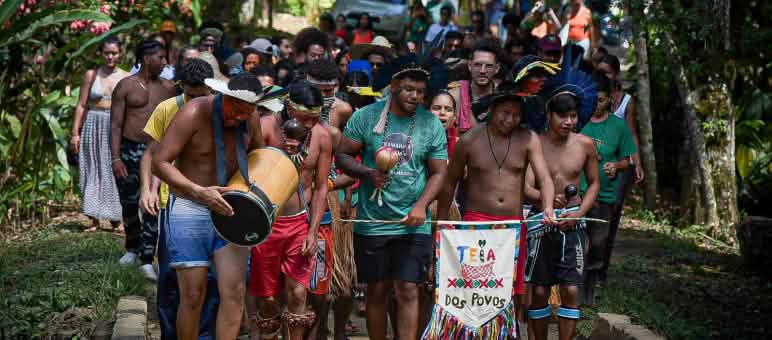
In southern Bahia, a powerful alliance of Black, Indigenous, and traditional communities is rebuilding forests tree by tree and seed by seed. Through multi-day gatherings, agroecology training, and solidarity planting sessions, the Bahia Peoples’ Web is turning territories threatened by agribusiness into schools of freedom rooted in the land.
Project Overview
Project FocusEcosystems / Rainforest Defenders
Project Objective Protecting forests and food sovereignty
Activities Multi-day meetings, educational work, and protection of human rights and territories
The Bahia Peoples’ Web (Teia dos Povos da Bahia) is a wide-ranging organization of Black and Indigenous peoples from various parts of Brazil. It includes traditional communities, ancestral territories, rural and urban movements and groups, peripheral communities, people experiencing homelessness, settlers, and smallholders, as well as organizations, associations, and social movements from the countryside and cities.
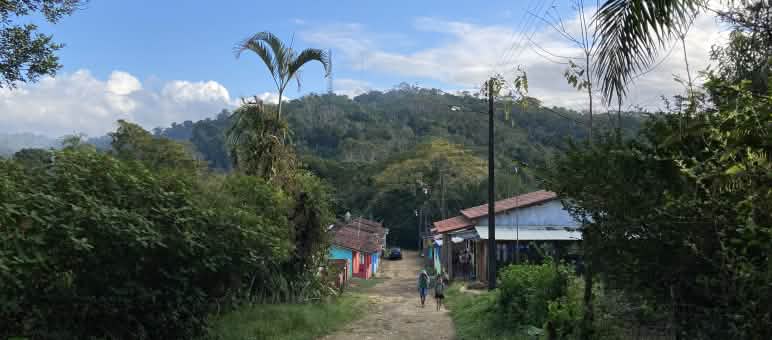
The Black and Indigenous alliance was founded in 2012 at the First Agroecological Day of Bahia in the Terra Vista settlement in the municipality of Arataca in southern Bahia. The Bahia Peoples’ Web, organized on the basis of grassroots struggle for land and territory, food, and educational autonomy independent of elections and state institutions, rests on three principles:
1. Land and food are the foundations of life and are developed collectively and in solidarity.
2. Work and study must lead to freedom and the ability to build a solidarity economy that respects the cultures and ways of life of traditional peoples and communities.
3. The peoples’ collective identity must be affirmed so as to serve as the foundation for a new era.
How the Web defends land and territory
Bahia is the fifth-largest state in Brazil and one of the most biodiverse, encompassing the Cerrado, Caatinga, and Atlantic Forest ecosystems. This diversity is being destroyed by agribusinesses such as soy and oil palm plantations, as well as by cattle ranching and mining.
Amid an increasingly violent scenario of dispossession, land grabbing, and destruction of ancestral lands, the Bahia Peoples’ Web holds regular training sessions and exchanges of knowledge and agroforestry practices with the aim of defending areas destroyed by agribusiness and cattle ranching and restoring forests.
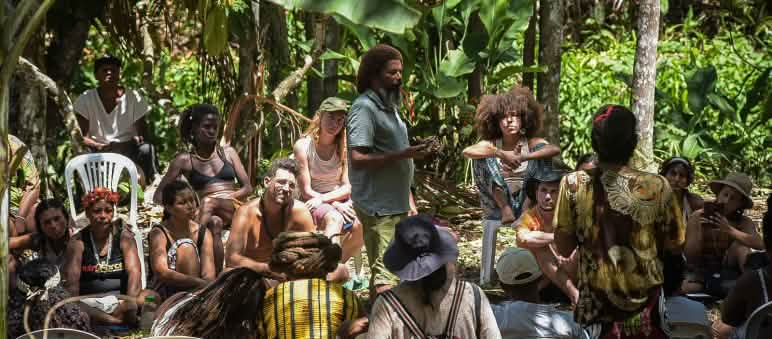
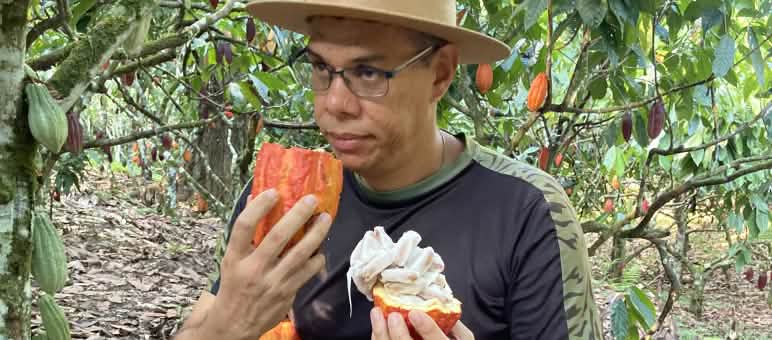
At these meetings, which have been attended by up to 4,000 people, Web members exchange heirloom seeds, share their experiences in defending territories and practices that guarantee their food autonomy, and promote educational strategies rooted in the peoples’ collective identity. They carry out the daily work of establishing agroforests, planting trees, building cisterns to collect rainwater, organizing networks to exchange heirloom seeds, and other practices aimed at fostering a deep relationship between peoples and the land and the other living beings that inhabit it.
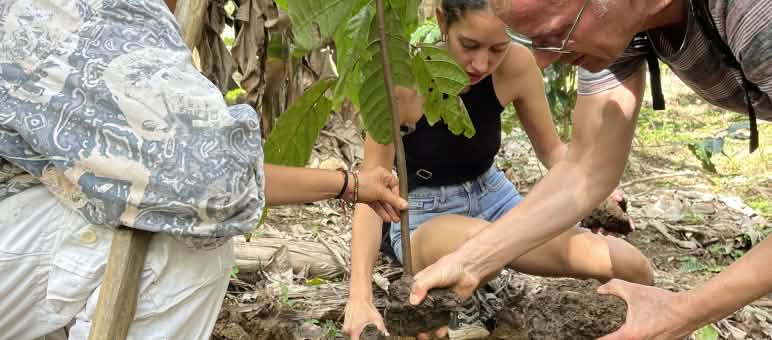
Most training meetings culminate in “solidarity agroecological work sessions,” in which participants work together to reforest and plant in ecologically damaged places, typically in the same territory where the meeting takes place. Between 2014 and 2019, the Web organized 50 such solidarity work sessions in which more than 15,000 trees were planted in degraded areas and in the riparian forests of rivers and springs. Across these territories, a total of 30 hectares are now planted with food crops: more than 5 hectares of organic gardens in the communities and 25 hectares of collectively managed plots that serve as seed banks.
The Peoples’ Web meetings last several days. Afterwards, the people and community representatives return to their territories committed to creating and living freedom of the soil and of cultivation, food autonomy, educational practices that reflect their collective identity, and solidarity.
Support for the Bahia Peoples’ Web
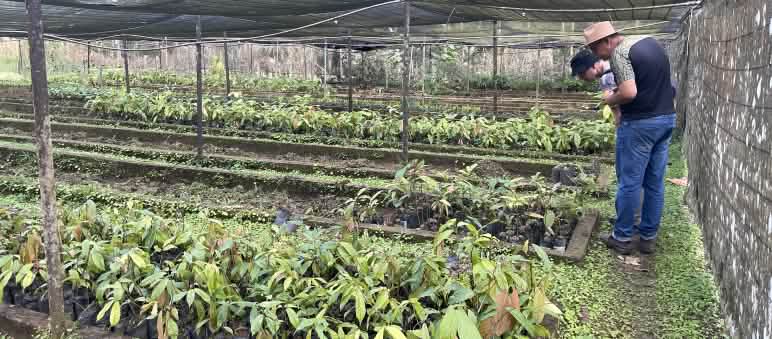
In 2023, Rainforest Rescue became a partner of the Bahia Peoples’ Web and began supporting the project ‘Raising Forests in Defense of Territories.’ The project offers agroecological training for at least 50 grassroots leaders from the peoples and territories that make up the forum and supports the creation of agroforestry systems. The first phase of the training includes debates, study sessions, workshops, cultural activities, and agroecological practice in the territories. In the second phase, participants take part in workshops on reforestation, fruit cultivation, food production for household use, building networks of heirloom seeds, agroforestry systems, biofertilizer production, green manures, and seedling production.
If you would like to support the work of the Bahia Peoples’ Web, please donate here.