Women leading in Sulawesi: Protecting the forest from nickel corporations
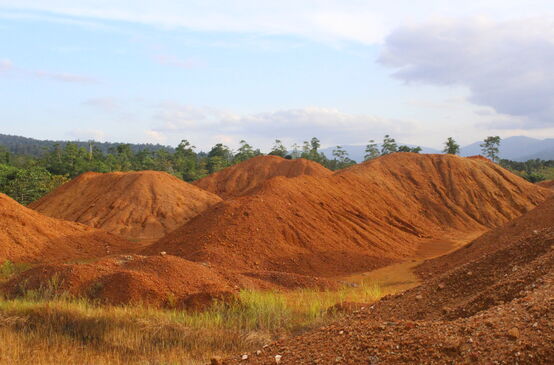
Rainforests are being cleared, farmland destroyed, and the livelihoods of entire villages devastated – nickel mining is leaving a trail of immense damage. Yet the people of Sulawesi are fighting back, with women like Mama Kilia in the front lines.
Project Overview
Project FocusEcosystems
Project Objective Preserving rainforest, stopping mining, plantations, and land grabs, empowering women
Activities Campaigns, research, organizing resistance
Women defend the rainforest
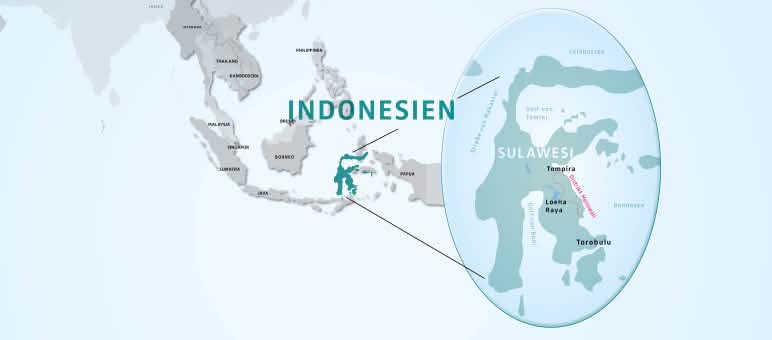
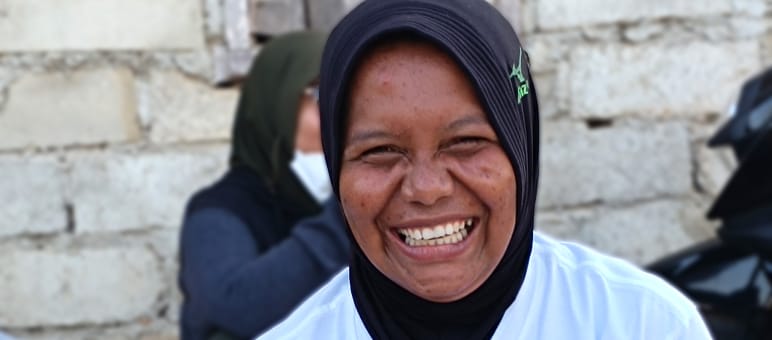
“We women are defending the rainforest in Sulawesi as vigorously as no one else.” That is how Mama Kilia, a courageous farmer from the village of Torobulu in the south of the island, describes it. Women are especially affected by deforestation.

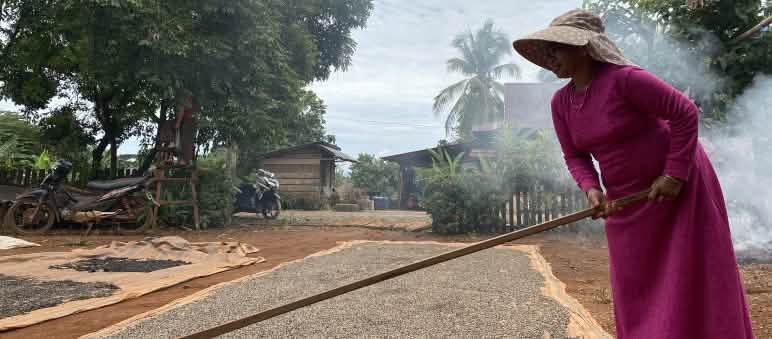
As farmers and gatherers, they are largely responsible for feeding their families and providing income. The most important crop in many southern villages is pepper. Women are the backbone of the subsistence economy, which depends on protecting the rainforest.
Women have a close bond with the forest, since without it they cannot survive. They know which roots, fruits, medicinal plants, and fibers for weaving can be gathered.
But everything that women safeguard – food security, income, and forest preservation – is under acute threat. Nickel mines and plantations are expanding rapidly, forcing local people to resist.
The urgent question is: How can the women stop the bulldozers and halt deforestation? Many of the groups sought help from environmental organizations. These groups came together as the Aliansi Sulawesi, since the breakneck expansion of nickel mines and industrial facilities demands collective strength. The alliance supports the women with environmental education, campaigns, legal aid, and organizational assistance.

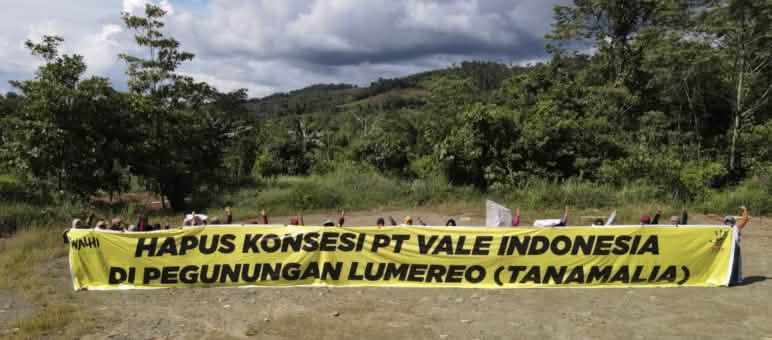
Mama Kilia from Torobulu is one example. The bulldozers of a nickel mine reached the edge of the village, and dust covered homes and gardens. Villagers protested. The company pressed charges against dozens of them, and Mama Kilia went to trial. She was acquitted: The defendant had not committed a crime, but had defended the right to a healthy environment.
The result: The bulldozers had to withdraw. The pepper gardens of Torobulu were saved from destruction. Other women’s groups followed Mama Kilia’s example. They proudly say: “Our effort as women has saved thousands of hectares of rainforest from destruction!”
What the women’s groups have achieved so far with the support of Aliansi Sulawesi and Rainforest Rescue:
- 25,000 hectares of rainforest saved
- 4,200 hectares of pepper gardens preserved
- 1 nickel mine temporarily closed
- 5,000 hectares of coastline and mangrove forest spared from pollution
The demand for nickel is rising
The boom in electric cars, digitalization, and the growing use of batteries in electronic devices has triggered an aggressive rush for Sulawesi’s nickel-rich soils.
More than 380 mining concessions have been granted in Sulawesi. Together, they cover one million hectares, 80 percent of which are in forested areas. The threat is made worse by huge infrastructure projects such as large industrial parks, roads, and ports.
Indonesia aims to become the world leader in car batteries. Nickel ore is processed in four industrial parks that house smelters, steel plants, and battery factories. They are powered by coal-fired power plants, whose emissions belie the myth of a “green” energy transition.
Water pollution is causing skin diseases, especially among children. Drinking water now has to be purchased, putting pressure on household budgets. In many places, washing clothes in rivers is no longer possible. Many residents are pressured to sell their land or enticed with empty promises.

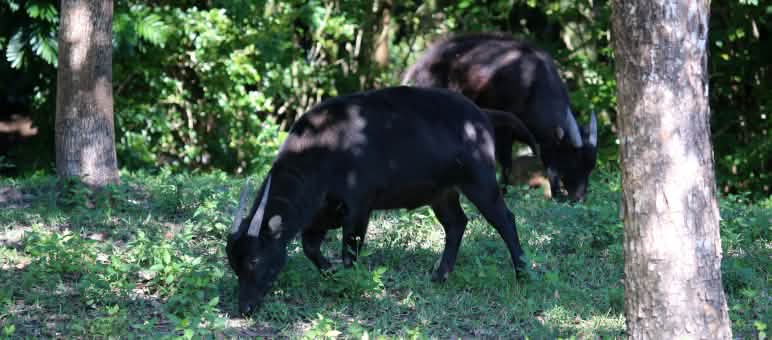
The island of Sulawesi is a biodiversity hotspot with many endemic species: the anoa dwarf buffalo, the maleo bird, the Sulawesi hornbill, and the babirusa deer pig. Wide-eyed tarsiers and macaques also live in this natural paradise, along with sail lizards, palm civets known as Sulawesi rollers, and the bear cuscus, a tree-dwelling marsupial with a bear-like face.
Our partners: women’s groups and Aliansi Sulawesi
In the face of these massive challenges, four environmental groups from Sulawesi belonging to the WALHI network (Friends of the Earth) formed an alliance. Aliansi Sulawesi coordinates the work of women’s groups against the spread of mining and plantations. The activists have broader goals: existing mining concessions must be withdrawn. They are working to influence politics and raise international awareness and solidarity.
Voices from the Rainforest podcast
Sulawesi’s green dilemma – the true cost of nickel mining
Amien, coordinator of Aliansi Sulawesi, in conversation with Stefanie Hess, Rainforest Rescue
22 minutes, English
“Nickel mining is a dirty business,” says Amien in our first podcast. “Volkswagen, Volvo, Hyundai, Toyota, Tesla – they’re all in on it!”
Amien shares first-hand accounts of how nickel mining affects daily life, culture, and the environment, and why claims of “green” nickel are misleading.
But despite these early successes, the island of Sulawesi remains in great danger. The government of President Prabowo Subianto is planning one million hectares of new oil palm plantations, as well as more nickel and gold mines and timber plantations for pellet and biomass production. The alliance aims to stop this and preserve at least one million hectares of rainforest.
Goals of the alliance
- Protect and conserve the rainforest.
- Revoke and prevent mining and plantation concessions.
- Strengthen the capacities of young people and women in particular.
- Increase public – including international – pressure for rainforest protection.
Aliansi Sulawesi is working specifically to empower women and make their concerns visible. In 2023, Aliansi Sulawesi enabled several women from Sulawesi to take part in the Global Thematic Social Forum on Mining and the Extractive Economy.
In 2024 and 2025, alliance representatives spoke at conferences and at the United Nations Working Group on Business and Human Rights.

Read more
The trial of Mama Kilia: Verdict in Indonesia: A healthy environment is a human right
Petition: Yes to the ‘green revolution’ – but without copper and nickel from the rainforest!
Video by WALHI Southeast Sulawesi (member of Aliansi Sulawesi) and Mongabay Indonesia on the criminalization of Mama Kilia
13 minutes, Indonesian