

CEPA free trade agreement signed – a threat to people and the environment
Belgium, Germany, Spain, France, Indonesia, Italy: The free trade agreement between Indonesia and the EU was officially signed today in Bali. Europe aims to secure access to raw materials, while Indonesia seeks profitable export markets. But the economic growth pursued through CEPA spells trouble for the rainforests and their inhabitants.
“The free trade agreement (CEPA) between the European Union and Indonesia flings the door wide open to further destruction of our ecosystems and deeper injustice toward nature and humanity,” says Safrudin Mahendra of YIHUI (Human and Forest Foundation), a partner organization of Rainforest Rescue.
“We reject the economic model on which CEPA is based, in which forests, land, and natural resources are reduced to export goods. Palm oil, mining, and monocultures are the main drivers of deforestation, agrarian conflict, and land grabbing,” says Rahmad Syukur of APEL Green Aceh.
“CEPA threatens the lives of Indigenous Peoples. Their right to free, prior, and informed consent (FPIC) is not guaranteed in the agreement,” says M. Habibi of Save Our Borneo. “Borneo has already lost half of its rainforests. There are currently 22 million hectares of palm oil plantations in Indonesia, with plans for many millions more.”
“CEPA entrenches a vulture economy,” says Franky Samperante of Pusaka. The resource-extractive economic system benefits a small group of oligarchs who trample ecological and social priorities underfoot. This includes so-called National Strategic Projects. The situation is especially grave in Papua, the Indonesian part of the island of New Guinea, where the last major rainforest and Indigenous areas are being cleared for palm oil, sugarcane, timber plantations, and mining projects.
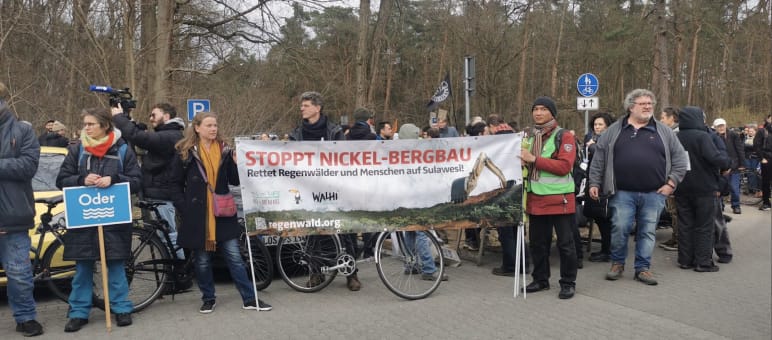
“CEPA is designed to give the EU privileged access to metals and minerals whose extraction and processing cause severe social and environmental harm,” says Marianne Klute of Rainforest Rescue. Vast quantities of nickel, copper, tin, and manganese are being consumed in the energy transition away from fossil fuels. Mining and refining are already devastating the ecosystems of Sulawesi, the Moluccas, Papua, and eastern Indonesia.
Better prospects for European business mean nothing good for the environment, for people, or for the climate: yet more state-backed deforestation for palm oil, agricultural monocultures, and raw materials. Deforestation for palm oil, pulp, agribusiness, and minerals has reached a record high in 2025.
Disputes over deforestation, palm oil, and nickel ore have delayed negotiations for years. It now appears that U.S. tariff policy has helped push through this rushed conclusion – just a few months before the EU Regulation on deforestation-free products (EUDR) takes effect.
On July 13, after nearly ten years of negotiations, Indonesia’s President Prabowo Subianto and European Commission President Ursula von der Leyen reached a political agreement on CEPA (Comprehensive Economic Partnership Agreement).
On September 23, EU Trade Commissioner Maroš Šefčovič and Indonesia’s Coordinating Minister for Economic Affairs Airlangga Hartarto signed the agreement in Bali.
The European Parliament and the Council of the EU must now vote on CEPA, and Indonesia must ratify it before the agreement can take effect. Together with our partners in Indonesia, we urge rejection of the EU–Indonesia CEPA free trade agreement.
123 Indonesian and European non-governmental organizations warn: “The agreement poses a serious threat to the environment and climate, as well as to the rights of women, Indigenous Peoples, workers, small-scale farmers, and fisherfolk.”
Joint statement by 123 organizations (summary):
No CEPA free trade agreement with Indonesia!
Joint statement by 123 organizations (full text):
Civil Society Statement on raw materials EU–Indonesia CEPA
Joint press release by European and Indonesian organizations, dated September 23, 2025
EU–Indonesia deal: global civil society alliance calls for a stop
A European–Indonesian alliance of civil society organizations and trade unions criticizes the political agreement on the EU–Indonesia free trade deal signed in Indonesia today. The organizations warn that this agreement threatens the environment, climate, and the rights of women, Indigenous Peoples, workers, small farmers, and fisherfolk. The alliance therefore calls on governments and parliaments to veto the agreement.
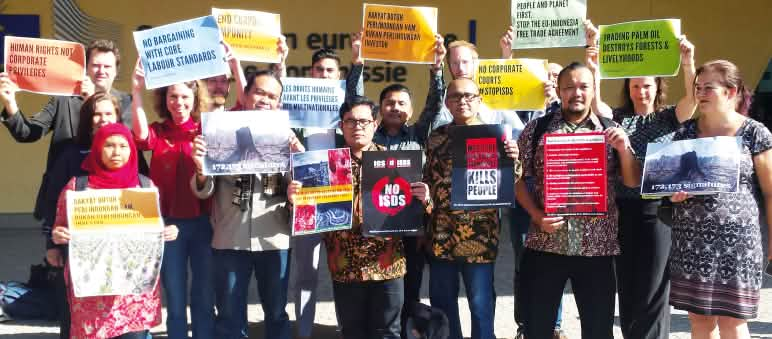
Through our petition STOP! No dirty deals with palm oil, we urged at the start of the negotiations that palm oil be excluded from the agreement. Nearly 300,000 people still demand guarantees for a healthy environment, climate protection, and decent living conditions. We first delivered the petition – then with 172,173 signatures – to the European Commission in Brussels in 2018.
Official information
Key elements of the EU-Indonesia Trade Agreement and Investment Protection Agreement
Euractiv: Europe, Indonesia seal sweeping trade pact for nearly all goods
Comprehensive Economic Partnership Agreement
This page is available in the following languages:
Rainforest conservation
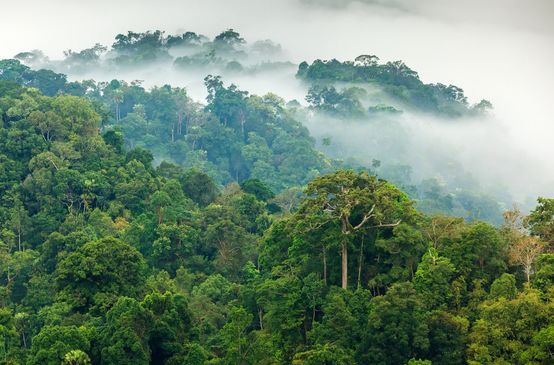
The web of life is so tightly woven in the rainforests that documenting new species is an everyday occurrence for researchers.

STOP dirty deals with palm oil!
CEPA, a free trade agreement between the EU and Indonesia, could open the floodgates for palm oil imports to Europe. Tell the negotiators to exclude palm oil from CEPA.
The rainforest
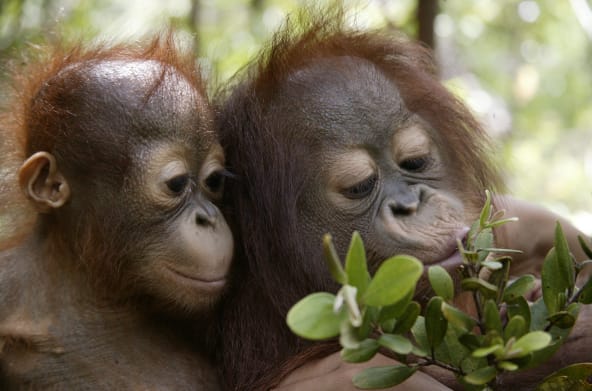
A green sea of ferns, mosses, vines and ancient trees. Iridescent butterflies and colorful birds. Flowers in every hue of the rainbow. The “green lung” is a natural wonder of the world. Find out more about the world’s most diverse, fascinating and threatened ecosystem.