Guardians of the bonobos: education and hope in the Congo rainforest
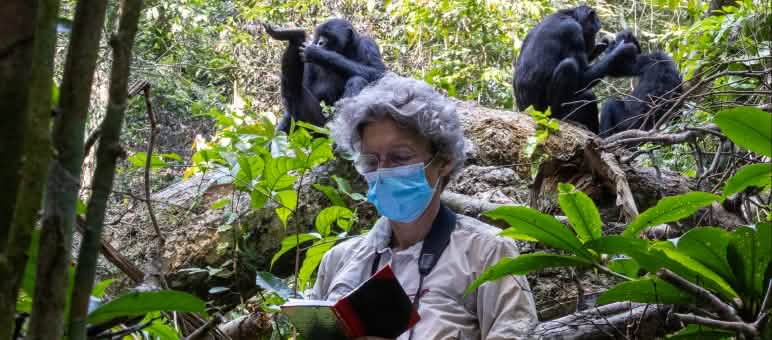
Democratic Republic of the Congo: Bonobos are perhaps the least known of the great apes. They live exclusively in the forests of the Congo. To help protect them, we support our local partner Bonobo Alive, an organization that focuses on conservation and a school project that encourages children who are eager to learn.
The villages where Bonobo Alive works lie deep in the rainforest of the Congo Basin, not far from the research stations LuiKotale and Ekongo. They can only be reached by chartered light aircraft or a weeks-long journey by boat. It is also thanks to this remoteness that the forests remain largely intact. But the pressure on nature is growing – and with it, the pressure on the bonobos’ habitat.
Since 2011, scientists working with Dr. Gottfried Hohmann and Prof. Barbara Fruth, who received the Order of Merit of the Federal Republic of Germany in October, have extended their work beyond research to include the protection of great apes, in cooperation with local communities. This includes improving village school facilities, supporting teachers, and covering the tuition for particularly promising boys and girls. We conducted an email interview with Barbara Fruth.
Why is the education program so important for rainforest protection?
Education is the key to understanding that nature’s resources are finite.
“Funding for schools and teachers in rural areas has been neglected by the relevant ministries. Education is an expensive asset that parents must provide for, even though they often lack the means. In the past, many children were simply not sent to school, or fathers tried to raise the funds through hunting. But when wild animals are used as a kind of ‘cash crop’ to pay school fees, the ecological balance of the mammal community – and with it the integrity of the forest – can quickly collapse.”
What does the program look like in practice?
“The education program has several components: we help equip and maintain school buildings, provide teaching materials, and offer regular financial support to teachers. We also fund young people’s training by covering tuition and examination fees.”
“We aim to give young people the opportunity to pursue education far from their home villages. This helps ease population pressure locally and reduces overuse of habitats in the interior. It also improves their chances of finding jobs in major cities.”
“The first female students have completed their schooling. Others who are in training return to their home region for internships, focusing on topics they encountered through the project. Some hope to study environmentally related subjects so they can work as park rangers for the national environmental authority and actively protect the bonobos and their habitat.”
What is Bonobo Alive’s overall mission?
“Bonobo Alive aims to help conserve bonobos and their natural habitat in the Democratic Republic of the Congo. Alongside education, the organization engages in development cooperation, anti-poaching measures, prevention of zoonotic diseases, and raising awareness about the bonobos’ natural environment.”
What fascinates you personally about bonobos and the rainforest?
You go into the forest with one question about bonobos – and come back with five new ones.
“Whenever I am there, I discover, experience, see, smell, taste or hear something new. The richness of this ecosystem is immense. Being there to take part in these discoveries is a gift.”
What motivates you as a scientist and as part of Bonobo Alive?
“My insatiable curiosity to even begin to understand the complexity of the rainforest ecosystem, and to raise awareness of it in others, from local residents to decision-makers at national and international levels. Once I have scientifically analyzed, grasped, and understood the facts, I can distill them and make them accessible to a broader audience.”
I hope that through this, I can help preserve a threatened natural paradise that has few advocates in a country where everything revolves around economic profit.
How are the bonobos doing overall?
“In our small and clearly defined study area, they are doing very well. Unfortunately, we must assume this is more the exception than the rule. As one of the volunteers contributing expertise to the IUCN Species Survival Commission, I am involved in updating the bonobos’ threat status on the IUCN Red List next year. The last update for bonobos was published in 2016.”
What are the threats to bonobos?
The primary threat comes from humans.
“Population growth and the expansion of villages and their fields for subsistence farming are pushing people further into bonobo habitats. Added to this are commercial logging and poaching. Human–bonobo conflicts are inevitable, and the risk of zoonotic diseases is rising. Bonobos are the main victims, as their immune systems are not prepared for many human-specific diseases.”
Do you have a message for the supporters of Rainforest Rescue?
“The supporters of Rainforest Rescue understand the importance of rainforests as the green lungs of our planet. It is wonderful that they devote their time and money to protecting them. They are surely aware of how the globalization of trade contributes to the destruction of these irreplaceable habitats.”
Talk about these issues with people outside your own bubble.
“Every piece of clothing from major retail chains, every new smartphone or tablet, every food item flown around the globe – everything marketed to us as better, newer, faster, and usually ‘cheaper’ – plays a huge part in the destruction of the last natural paradises, especially the rainforest.”
This page is available in the following languages:
DRC: Europe’s green transition must not cost Congo’s blood and forests!
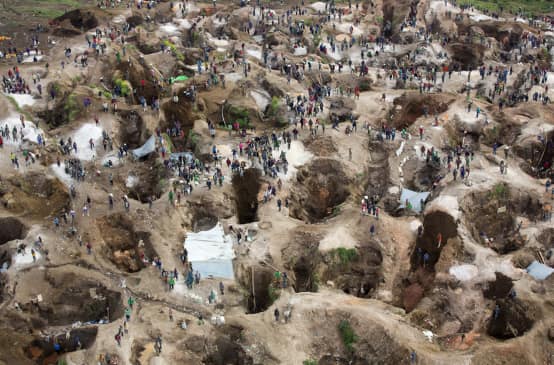
Our demand for raw materials drives shocking violence in the Democratic Republic of Congo. The EU must end its partnership on critical raw materials.
Protecting Africa’s rich natural heritage
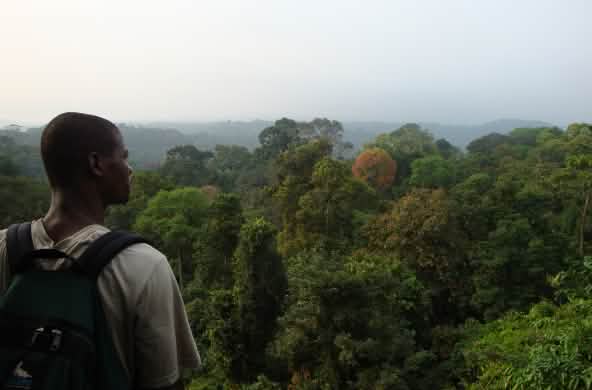
The Congo Basin is home to the second largest rainforest in the world, habitat of gorillas, chimpanzees and forest elephants. Our partners courageously defend these forests.
Bonobo conservation: fostering trust with a school
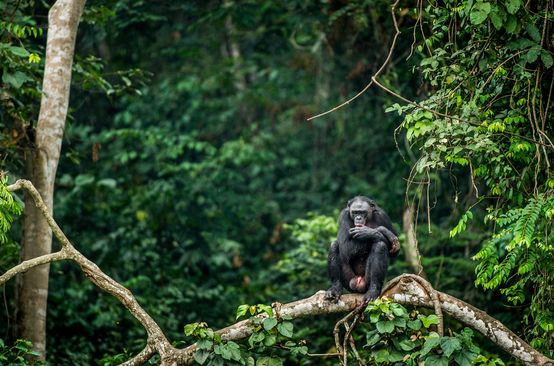
In Congo’s rainforest, saving bonobos also means building a future for local children. Our partner Bonobo Alive helps both thrive.
Biodiversity
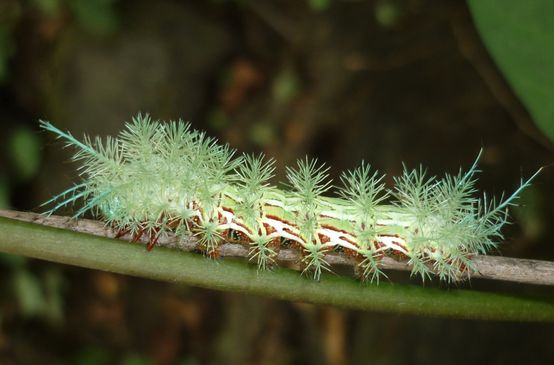
Life on Earth originated around 4 billion years ago. Since then, an unfathomable number of species have evolved, around half of which are insects. Numerous plant and animal species have yet to be documented, and many new ones are being discovered every day.