
Cyclone and deforestation: twin disasters
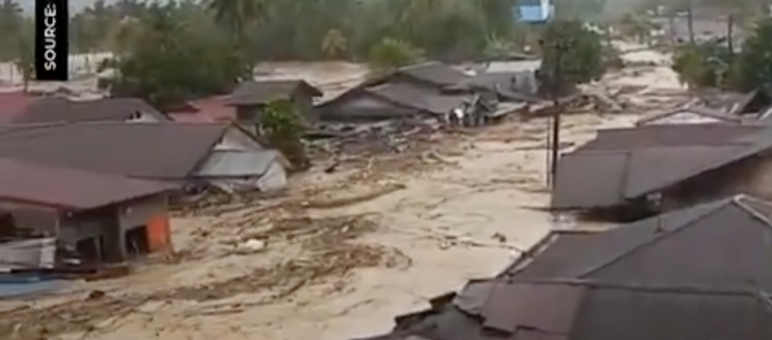
Indonesia: Cyclone Senyar, which struck Sumatra on November 26, has turned into a humanitarian and ecological crisis for local communities. Its devastation is being dramatically amplified by massive deforestation driven by short‑sighted economic interests. Rainforest Rescue project partners have been hit hard.
Cyclone Senyar makes landfall on Sumatra on November 26, 2025
Cyclone Senyar has claimed more than 800 lives on the Indonesian island of Sumatra alone. Hundreds of people are still missing, thousands have lost everything, and many have had to flee to safety. Numerous villages have been engulfed by mudflows, while landslides have buried homes and fields. The three provinces of Aceh, North Sumatra, and West Sumatra have been hit particularly hard.
Cyclones like Senyar form extremely rarely near the equator. Yet scientists warn that as the oceans continue to warm, such storms could become more frequent and more intense. Even Indonesia’s President Subianto Prabowo has acknowledged: “Climate change is a reality.”
Batang Toru ecosystem in danger

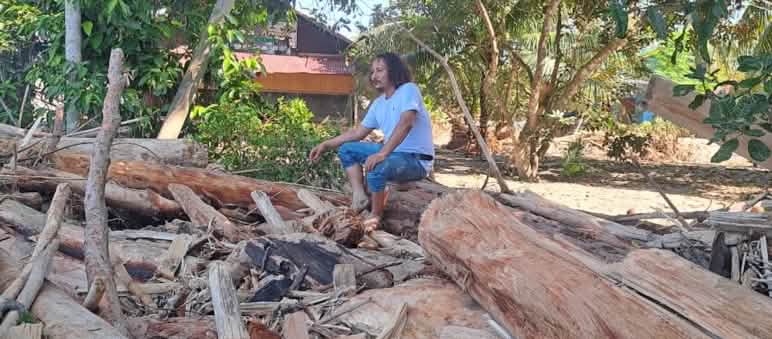
The Batang Toru ecosystem is suffering most from the consequences of the cyclone. After days of torrential rain, the rivers rose. Our partners report that the Batang Toru River has swept away hundreds, perhaps thousands, of tree trunks. These were felled trees that had been cut in the headwaters upstream and were waiting to be transported out. This is a clear indication that forest is currently being cleared for a dam and hydropower plant in the forest of the Tapanuli orangutans.
“Heavy rain and floods are washing tree trunks downstream, satellite images show clearcut forest,” says Rianda Purba, director of WALHI North Sumatra.
Along 13 kilometers of the Batang Toru River, around 350 hectares have already been destroyed for the dam and hydropower plant. In his analysis, Rianda Purba identifies additional large-scale projects in and around the Batang Toru ecosystem, which is home to Tapanuli orangutans, tapirs, Sumatran tigers, and other protected animal species. These include the Martabe gold mine of PT Agincourt Resources and the eucalyptus plantations that supply pulp to the Toba Pulp Lestari mill.

“We are deeply shaken. Many areas are cut off because roads have been destroyed and phone networks are down. We are trying to reach isolated communities and provide them with relief supplies. Village leaders report that there is no drinking water because landslides have destroyed the supply,” write our partners WALHI North Sumatra and AMAN Tano Batak.

They have organized relief efforts and, wherever possible, are bringing clothing, food, and other essential items to many of the 54 affected communities. The shock of the disaster runs deep, as they have witnessed the suffering of the people of North Sumatra for decades because of deforestation, land grabbing, and violence.
Ecological damage from misguided forest policy
“This is not a natural disaster. We are witnessing a man-made catastrophe, made worse by environmental destruction in the name of economic growth,” says Rianda Purba. It is misleading to point the finger at storms and climate change alone.
Both the environment and forestry ministries deny any link between the impacts of the cyclone and deforestation. President Prabowo, on the other hand, has said that deforestation must be stopped. Is Prabowo’s statement merely populist, as Indonesian environmental groups fear? He could still halt the planned release of 20 million hectares of forest for further megaprojects.
Rainforest Rescue projects

Rainforest Rescue supports projects of local partners on Sumatra in the Leuser ecosystem, around Lake Toba, and in the Batang Toru forest, the home of the Tapanuli orangutans.
The small Indigenous group Tigers of Pining, which has been highly successful in closing the gaps caused by illegal logging in the Gayo highlands of the Leuser ecosystem, reports a landslide that has hit their tree nursery. One member of the Indigenous group is still trapped there and cannot yet be reached. The village of Pining is sinking into thick mud, food has been destroyed and children are going hungry, reports Usman Ali of the Tigers of Pining.

The office of the Aceh Wetland Forum has been completely destroyed, and all of its equipment is gone. “We no longer have a computer, a camera, chairs, a fan or books,” reports Yusmadi Yusuf. Work with Indigenous communities to protect mangroves, peat bogs and swamps has stalled, routes are impassable and infrastructure has been devastated.
The rainforest of Sumatra
Over the past 30 years, Sumatra has lost its lowland rainforests – cleared for oil palm and eucalyptus, for mining and agribusiness. Only the forests of the Leuser ecosystem (in the provinces of Aceh and North Sumatra) and in the Barisan Mountains along the west coast remain. Both forest regions are vital for biodiversity. Tigers, orangutans, elephants, and rhinos still live here. The forests secure the water supply and protect against erosion, drought, flooding and landslides.
The loss of wetlands is just as dramatic. Only fragments remain of the Tripa, Singkil and Kluet peat bogs on the west coast of the Leuser ecosystem. The once extensive mangrove forests on the east coast have been turned into oil palm plantations and fish ponds.
This page is available in the following languages:
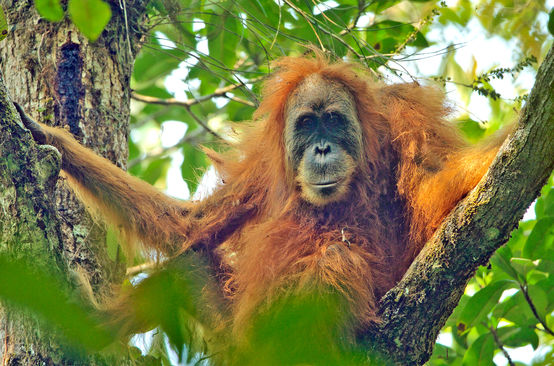
Stop bulldozing the Tapanuli orangutan!
A dam for a 510 MW hydropower plant in Batang Toru forest on Sumatra could spell oblivion for the recently discovered Tapanuli orangutan.
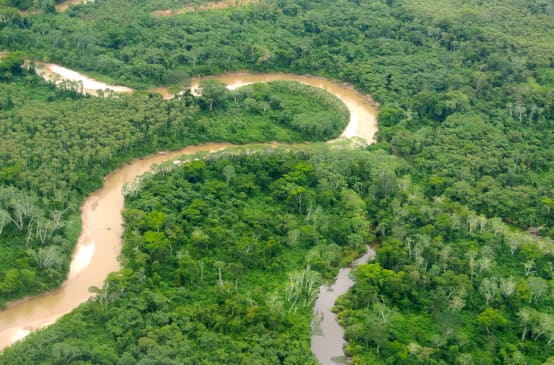
Climate and the rainforest
Rainforests are tightly intertwined with the climate: while forests are suffering from global warming, they are also the key to climate protection.