Náaybi Lu’um: Mayan women and the land of their dreams
Mexico: For years, Maya women in the Yucatán were shut out of land and pushed to the margins. With Rainforest Rescue donations, they secured Náaybi Lu’um – “dreamland” – and turned it into a place where children learn, wildlife returns, and the rainforest is protected with patience, skill, and resolve.
“We founded our Túumben K’óoben cooperative 17 years ago,” explains Dulce Milagros Magaña. “As an Indigenous grassroots organization, we work in the municipality of Felipe Carrillo Puerto in the Mexican state of Quintana Roo. There, in the rainforest of the Yucatán Peninsula, we Maya women have long watched the increasing effects of climate change with concern and considered how its environmental impacts could be reduced.
The solution: we help improve local processes, both in production and in the lives of small farming communities. In the early years, our work focused on better protection and stewardship of the region’s natural resources. Changes in the way we live also require a change in the way we think.”
The women quickly began replacing the open fires that had been standard until then with far more efficient stoves. This not only saves a great deal of firewood, but also protects their health: The stoves produce less smoke, and that smoke is directed outside through a pipe, so women do not have to stand in the fumes while cooking.
For many years, we dreamed of having a piece of land of our own where we could grow plants to ensure healthy nutrition. And where we could build economic activities that match our way of life and lead us toward a good life in harmony with nature,” explains Dulce Milagros Magaña.
But there was a major obstacle: the Maya women had no land of their own and no rights to the communally used agricultural plots known as ejidos, which are dominated by men.
With the construction of the “Maya Train,” a major tourism infrastructure project on the Yucatán Peninsula, the prospect of Túumben K’óoben acquiring a piece of land seemed to recede into the distance. The prestige project of Mexico’s president at the time drove land speculation, rapidly rising prices, and accelerated urban sprawl across the area.
Yet the women had identified an ideal rainforest property bordering several hectares of land they had already acquired with great effort. They knew it was habitat for a wide range of wildlife.
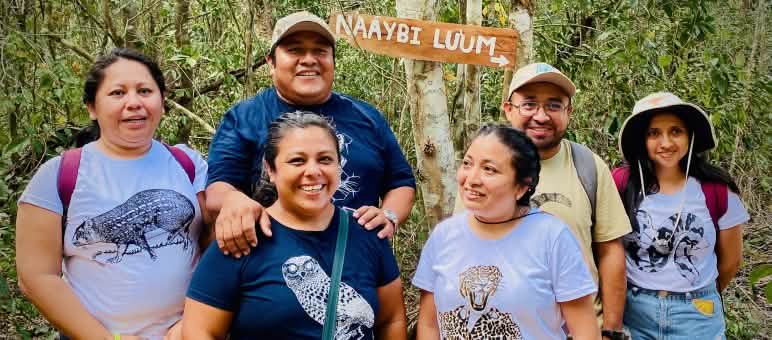
In 2022, our dream came true. With support from Rainforest Rescue, we bought the property we call Náaybi Lu’um. In our Maya language, that means dreamland.”
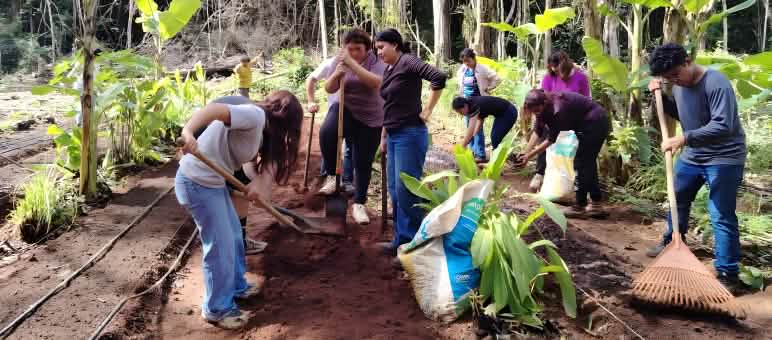
After that, the members of the cooperative developed a land management plan to define the best division between production and conservation areas, establish rules, and put up signs. With this plan, they organize both conservation measures and activities in education and production. This included maintaining vehicle and footpaths, cultivated areas, and bodies of water, as well as building a simple structure. There, they welcome visitors and run workshops, courses, and exchange programs to share experience. Since then, they have begun producing healthy food in their small agroecological center.

Preserving, documenting, and communicating are essential steps in protecting life.
Monitoring wildlife and conserving the rainforest in Yucatán

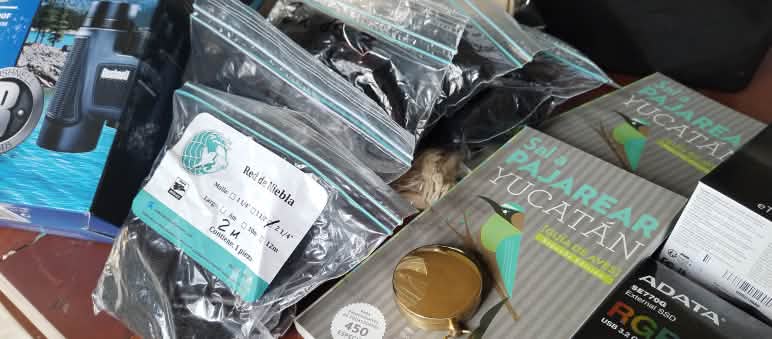
On their rainforest property, they combine traditional knowledge with technical tools to develop active, holistic protection for the ecosystem. To document fauna, they acquired motion-activated wildlife cameras and bioacoustic recording devices and attached them to trees at strategic points in the forest.

The cameras captured images of numerous species, including deer, pacas, wild boar, and jaguars. Some were traveling with their young, which underlines the area’s importance as a breeding ground. The acoustic devices record birdsong and the calls of other animals. They also carry out forest surveys to document further traces: footprints, sleeping sites, scratch marks, scent marks, excrement, feathers, hair, nests, and dens. And of course, they also document the flora.
Of the more than 600 animals they have recorded and sighted through these monitoring activities, they have compiled extensive inventories. Nearly 150 species have been identified in the conservation center, and at least 38 of them are listed as threatened on the Red List of the International Union for Conservation of Nature (IUCN) and in Mexico’s official threat and protection categories (NOM-059).
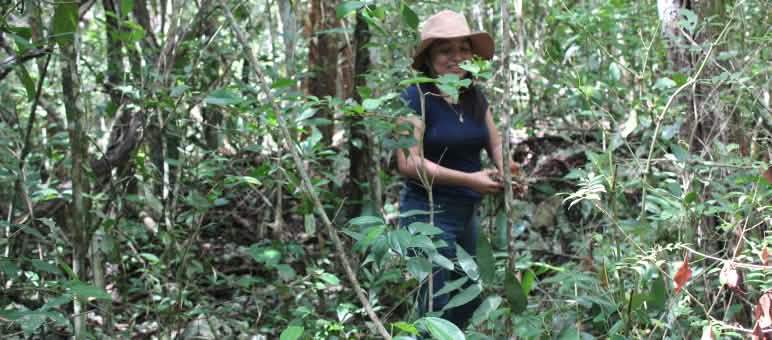
They also observed that the fruit trees they planted – the Maya breadnut tree (Brosimum alicastrum), sapodilla tree (Manilkara zapota), wild guava (Psidium sartorianum), and canistel tree (Pouteria campechiana) – together with large rainforest tree species such as chacá (gumbo-limbo – Bursera simaruba), tzalam (Lysiloma latisiliquum), yax ek (blue ironwood – Vitex gaumeri), katalox (Mexican rosewood – Swartzia cubensis), and kitanché (Gaumer’s acacia – Acacia gaumeri) are crucial for creating wildlife corridors and connecting habitats in the rainforest. Sometimes the cameras also document a harsher reality when they capture photos of unauthorized people hunting in the forest.
Through all these activities, we are strengthening our connection to our territory. It allows us to know, value, and protect the biodiversity that lives in this area.”
Why is biodiversity monitoring in Náaybi Lu’um important?
Through these ongoing conservation and agroecological measures – including fruit trees, vegetable growing, the production of honey from stingless American Melipona bees, and other farm animals – the members of the Túumben K’óoben cooperative have become a model for agroecological learning in the municipality of Felipe Carrillo Puerto.
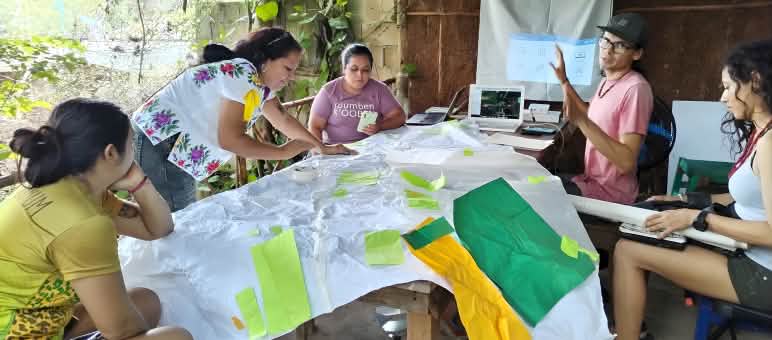
In 2025, they organized public workshops on environmental education and land protection to involve local people in conservation activities and make the impacts of megaprojects such as the Maya Train and mass tourism visible. In a workshop on acoustic wildlife monitoring, where the equipment used was presented, sounds were interpreted, and data was analyzed, they raised awareness of the importance of a healthy ecosystem.

By showing what is being done in Náaybi Lu’um, we want to have a positive influence on other areas.”
They have also taught elementary and preschool children about local wildlife, using play, imagination, and art to nurture a culture of mindfulness, respect, and appreciation for the Maya rainforest. The children learned about species living in Náaybi Lu’um, including the jaguar (Panthera onca), ocelot (Leopardus pardalis), Mexican agouti (Dasyprocta mexicana), great curassow (Crax rubra), red brocket deer (Mazama temama), and Geoffroy’s spider monkey (Ateles geoffroyi yucatanensis). The objective is to awaken empathy, curiosity, and love for nature.
We firmly believe that education is the same as conservation, and that planting this seed in childhood is the key to protecting our natural heritage.”
To learn more about Tu’úmben Ko’oben and their Náaybi Lu’um rainforest, watch the following video (in Spanish, 4 minutes):