Completed campaign
Tell Burger King and Cargill to stop deforestation!
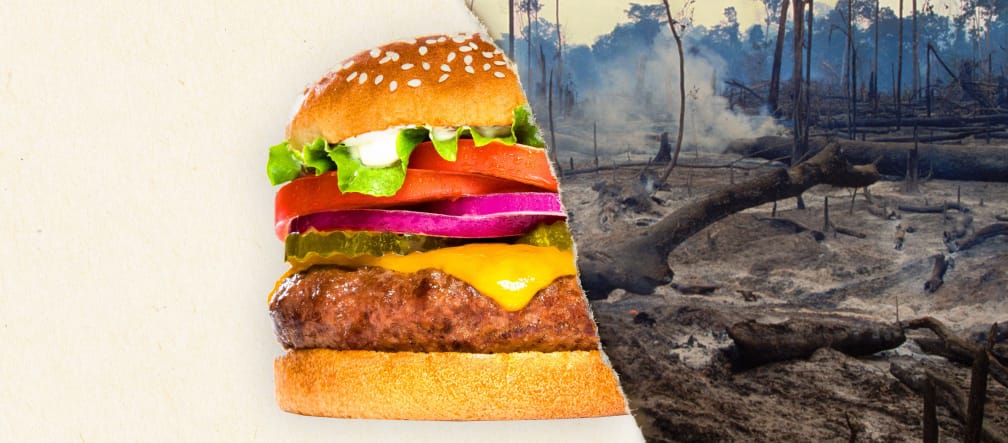
Burger King refuses to answer questions about its suppliers despite overwhelming evidence that the cattle for its beef are fed with soy stemming from forest destruction. Tell the fast-food giant to get deforestation out of its supply chain and to protect the habitat of jaguars and monkeys.
To: CEO Daniel Schwartz and the management of Burger King
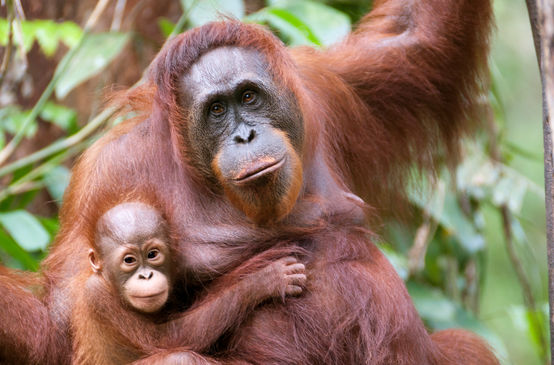
“Burger King’s suppliers clear forests for industrial soy farms and feedlots in South America. Get deforestation out of your supply chain NOW.”Sloths dangle from limbs, jaguars slink along the forest floor, monkeys cavort in the treetops – South America’s forests and savannahs are bursting with life. Yet fast-food chains such as Burger King are destroying these diverse habitats.
“South America’s forests are ‘ground zero’ for beef-driven deforestation,” notes the Union of Concerned Scientists. In their study “Cattle, Cleared Forests, and Climate Change”, they document just how little food industry giants care about the environment. On the organization’s scorecard of major beef sellers’ deforestation profiles, Burger King scored zero of a possible 100 points.
A report and satellite images published by the NGO Mighty Earth documents Burger King’s practices in South America: the fast-food giant buys soy for animal feed from producers who clear forests and savanna for their industrial agriculture operations. Burger King accepts that one of its most important suppliers, Cargill, intends to continue destroying forest for soy farms until 2030 – a further thirteen years in which bulldozers will be wiping out the habitat of sloths, jaguars and monkeys.
The beef that goes into the company’s Whoppers in Germany, for example, is sourced entirely within Germany and neighboring Austria. However, Burger King refuses to answer detailed questions about the sources of the feed. From a global perspective, Burger King’s purchasing policy is a disaster for nature.
Please tell Burger King to get environmental destruction out of its supply chain now.
While this petition is addressed to Burger King, the fast-food giant is typical for other companies in the industry that show equally little regard for forests and wildlife. The rainforests and millions of animals would benefit the most if more people were to choose a vegan or vegetarian diet.
Burger King is the second largest fast-food chain in the world. The group has a total of 15,000 restaurants in more than 100 countries.
Burger King’s parent company Restaurant Brands International is owned by 3G Capital, which in turn controls the Tim Horton’s coffee chain, Kraft, Heinz, InBev and Anheuser-Busch.
The agricultural giants Cargill and Bunge are two of Burger King’s most important suppliers.
According to Burger King, 80 percent of the beef used in its German restaurants is sourced domestically, while the remaining 20 percent comes from Austria. Burger King did not reply to our detailed questions about whether the animals are reared with feed from Cargill or Bunge.
In Brazil's Cerrado, 50,000 hectares of forest were destroyed in regions in which Bunge operates; between 2011 and 2015, no less than 567,562 hectares were lost. In areas in which Cargill is active, 130,000 hectares were deforested within those five years.
A soy moratorium in the Brazilian Amazon is often praised as a model to stop deforestation. On closer inspection, however, it becomes apparent that the moratorium is merely clever PR and greenwashing. Once it entered into force, the destruction of rainforests declined – but it exploded in the Cerrado.
Burger King’s reaction
Burger King Germany responded to Rainforest Rescue’s detailed questions with general references to certificates. We regard the key statement to be “Please understand that we cannot provide any further detailed information or breakdowns.”
Burger King in the media
Media around the world have been exposing Burger King’s responsibility for rainforest destruction. Here is a selection of links:
The Guardian: Burger King animal feed sourced from deforested lands in Brazil and Bolivia
Edie.net: Burger King linked to alleged South American deforestation practices
TriplePundit: Burger King Accused of Causing Deforestation Across Latin America
My Green Pod: The Ultimate Mystery Meat
Woodworking Network: Rainforest being burned for farming at faster pace
VegNews: Burger King's Impact on Deforestation Exposed
Plant Based News: Burger King's Damning Environmental Impact Exposed
To: CEO Daniel Schwartz and the management of Burger King
Dear Mr. Schwartz,
Ladies and Gentlemen,
Tropical forests and savannahs are the habitats of an incredible variety of plant and animal species such as sloths, jaguars and monkeys. Burger King endangers this habitat by purchasing beef from suppliers who destroy rainforests for their fields and pastures.
The supply chain of Cargill, a major Burger King supplier, extends deep into tropical and subtropical forests such as the Cerrado. While Cargill has pledged to stop purchasing raw materials from suppliers that destroy forests, its commitment is completely toothless, as Cargill does not plan to implement it until 2030.
In other words, bulldozers will continue destroying the habitat of countless plant and animal species for another thirteen years. We cannot wait that long!
Please get deforestation out of your supply chain without delay.
Kind regards,