
40 years of standing up for rainforests:
Rainforest Rescue


The beginning of a life’s work
The beginning of a life’s work
In the late 1970s, Reinhard Behrend, a Hamburg-based sociologist, travels to the rainforests of Africa and Indonesia and witnesses a catastrophe: ancient primary forests that had stood for thousands of years are being destroyed.
Day after day, giant trees fall – for furniture, for park benches, for plywood. European timber companies hold concessions in Africa’s rainforests.
Behrend quickly realizes: “I have to do something – now!” Otherwise, endangered chimpanzees, gorillas, and orangutans will have little chance of survival.
His model is the Rainforest Information Centre in Australia: “Activists who stand in front of bulldozers, chain themselves to trees, bury themselves up to their necks! Direct action, like the kind we used to organize against nuclear power plants.”
And the Australians are successful.
Back in Hamburg, Reinhard and his partner Bettina find allies. In June 1986, they found the organization Rettet den Regenwald (Rainforest Rescue).
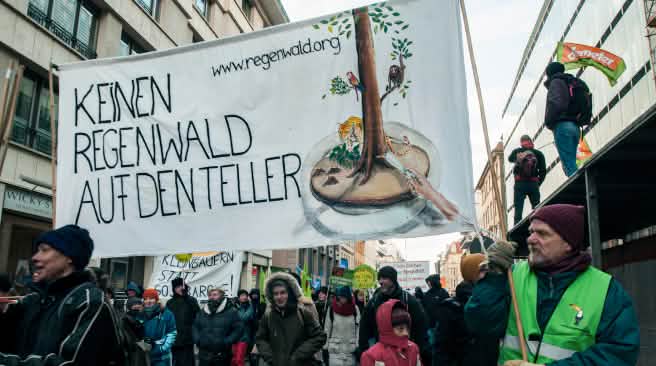
Forty years have passed since then. Forty years of standing up for the rainforest with protest marches, campaigns and resistance. A small team with global reach, working with a growing number of partners in tropical countries.
A voice from the outset: the magazine
A voice from the outset: the magazine
On the day the association was founded, the first issue of “Regenwälder Zeitung” is published: 16 pages typed on a typewriter and illustrated in black and white.
The magazine – later renamed “Regenwald Report” – is still published today. We publish four issues a year of our German magazine, free of charge, in print and by mail. It delivers reports, analysis, background pieces and calls to action.
The issues are just as urgent today as they were then:
Rainforests in Africa and Asia are being destroyed for tropical timber.
In the Amazon, ancient forest giants fall for soy plantations and cattle pasture; in Indonesia, for oil palms.


www.rainforest-rescue.org – connected worldwide
www.rainforest-rescue.org – connected worldwide
In 1999, Rainforest Rescue’s website goes live. First in German, now in seven languages.
It offers petitions, news, in-depth features and videos. Over the years, millions of people around the world have used it to learn about tropical rainforests – and to take action.


Rainforest Rescue today: united in solidarity
Rainforest Rescue today: united in solidarity
Today, our core team includes 20 experts. We are connected across all continents, confronting environmental destruction and human rights abuses while working tirelessly to defend nature.
In 2023, our Swiss sister organization, Rettet den Regenwald Schweiz, is founded.
We keep using proven tools like talks, information stands and interviews, as well as new ones such as webinars and podcasts. We speak to policymakers and present them with petitions signed by hundreds of thousands of supporters.
We carry out research on the ground, visit our rainforest partners and welcome some of them here in return.


Our partners in the rainforest: fearless and steadfast
Our partners in the rainforest: fearless and steadfast
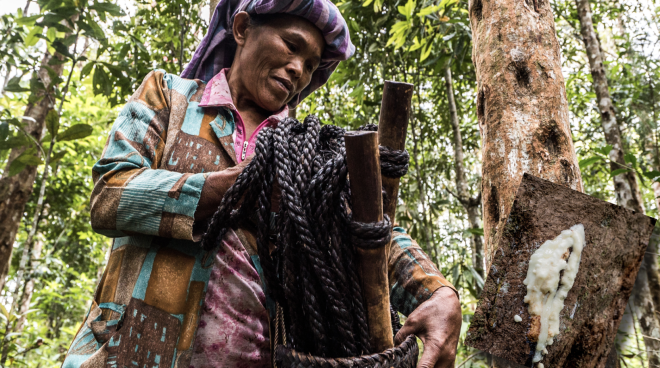
Indigenous communities, Eco-Guards, human rights defenders – all of them protect the habitat of wildlife and plants and the home of millions of people.
They defend the environment – sometimes through spectacular actions, sometimes in quieter ways.
“Information is our strongest weapon,” says Nordin of Save our Borneo.
Using GPS, videos and photos, rainforest defenders document logging. They report environmental crimes and bring them to the attention of authorities and the media. Through brochures, films and workshops, they raise public awareness.
Rainforest Rescue currently supports around 50 projects in the Global South. We are not just funders: We stand alongside our partners through public campaigning, political advocacy and network-building. We trust the activists on the ground, their knowledge, their expertise and their experience.
The major campaigns
The major campaigns
“We must raise our voices! After all, it is German companies and European tax money that are destroying the rainforest. Planting trees alone will not stop that – what matters most is public pressure here at home.” (Reinhard Behrend, 1986)
Tropical timber
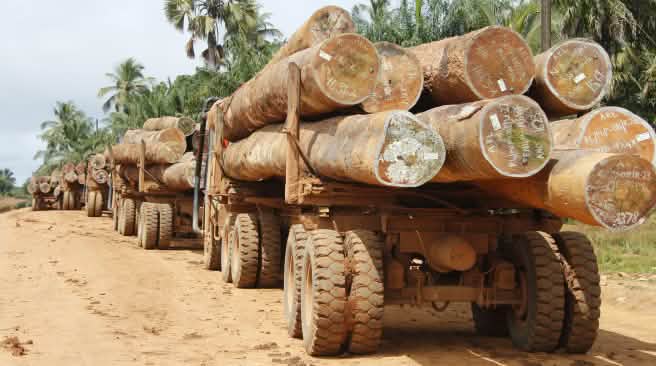
Our first major campaign, which continued for many years, targeted tropical timber imports. European timber companies, including German ones, were plundering the world’s tropical forests with the help of officials and governments – very often through corruption.
Our persistence paid off: people recognized the problems linked to tropical timber and boycotted it; cities and municipalities also stopped using it.
But labels such as FSC for supposedly sustainable wood have undermined the move away from tropical timber.
Logging continues to put forests and communities at risk – in Nigeria, for example. President Tinubu has banned the export of logs, but criminals pay little attention. They load their trucks with impunity. Instead, the police go after environmental defenders like our partner Martins Egot.
Palm oil
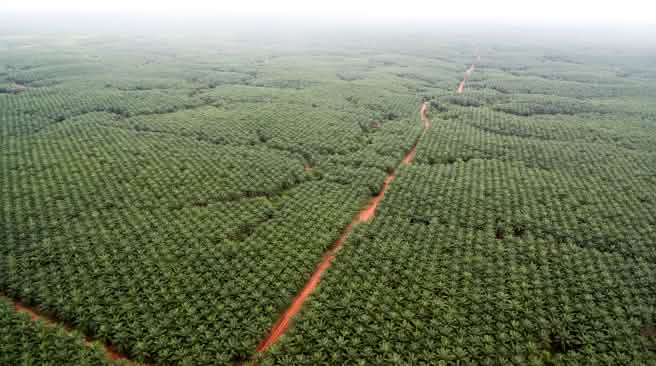
Spring 1999: “Burning for breakfast” is the headline in Regenwald Report. At the center is palm oil from Malaysia and Indonesia for consumers in Europe. Corporations such as Unilever, Nestlé and Henkel are importing more and more palm oil for spreads, sweets and detergents.
At first slowly, then more clearly, the protests of environmental and human rights defenders begin to have an effect. Palm oil is recognized as a problem, and politics and business respond to the pressure. In December 2014, EU rules on food labeling are tightened, allowing consumers to choose products without palm oil. Many manufacturers switch to locally grown vegetable oils.
Biofuels
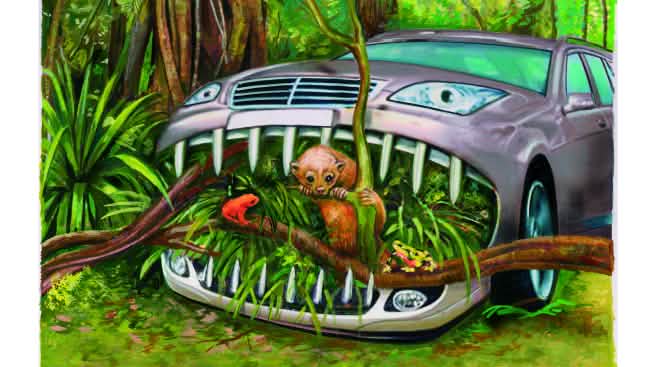
Around the turn of the millennium, plant-based raw materials are meant to replace crude oil and protect the climate. In Europe, palm and rapeseed oil go into diesel tanks and combined heat and power plants – backed by subsidies worth billions and mandatory blending quotas. Corn, wheat and sugarcane are turned into ethanol as a gasoline additive.
The result: plantations replace rainforests across Asia and Latin America. As food crops are turned into fuel, prices rise – and people’s plates are made to compete with car tanks.
Then came a success: the EU changed course and is phasing out palm oil as a fuel by 2030. Many countries act well ahead of the deadline, including Germany in 2023.
Mining
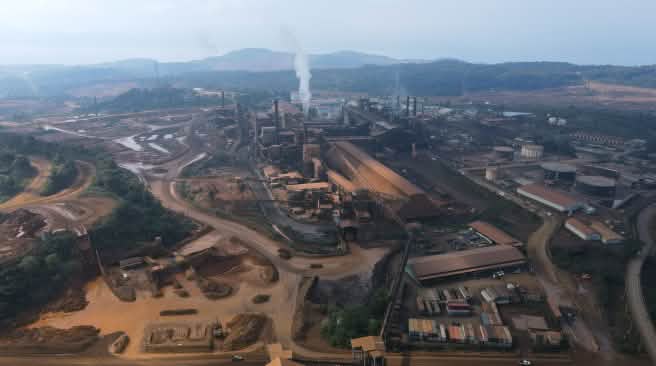
Mining is an increasing threat to rainforests, largely out of public view. At first, companies focus on bauxite, iron ore and gold. Then, in the mid-1990s, a company sought to mine copper in Ecuador’s cloud forests. The project was stopped, thanks in part to our long-standing partner DECOIN. We have worked together for 30 years.
The transition to electric mobility is also driving rainforest destruction. Cars and their batteries require huge quantities of cobalt, coltan, graphite and lithium. On Sulawesi, nickel mining is devastating entire landscapes. Indigenous communities – with women’s groups often at the forefront – are resisting the destruction, with our support. Together, they have protected almost half a million hectares of rainforest from clear-cutting.
Oil
Oil is extracted not only in the deserts of the Persian Gulf but also in rainforests. Ecuador’s Yasuní National Park has been a focus of resistance to oil drilling for more than 40 years. In 2023, our partner alliance YASunidos helped win a historic referendum to keep the oil beneath part of Yasuní in the ground. The government is now trying to delay the decision’s implementation. We are continuing to press for it to be honored.
The oil industry is expanding in Africa as well. In the Democratic Republic of the Congo, oil concessions and exploration plans threaten Virunga National Park, its forests and the gorillas that live there.
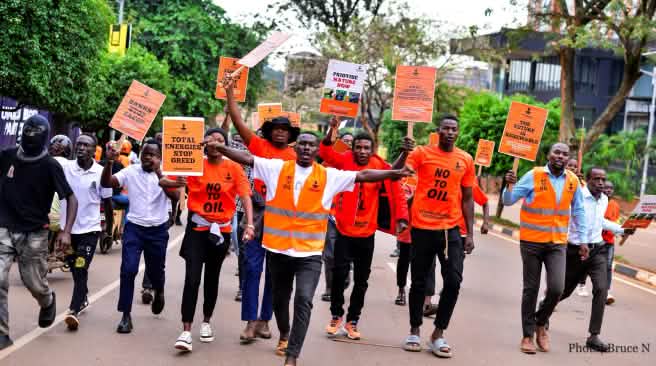
But the industry is meeting determined resistance. “Stop EACOP,” demand communities and environmental defenders in Uganda, referring to the planned East African Crude Oil Pipeline. Many are students who know that peaceful protest can lead to arrest and imprisonment.
Green deserts: tree plantations for paper
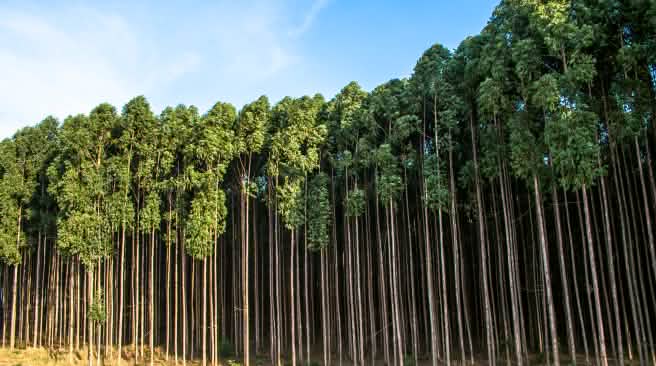
Paper and cardboard consumption is booming – and so is demand for eucalyptus and acacia pulp. Forests are cleared to make way for monoculture plantations, often illegally and on Indigenous land. Orangutans and tigers lose their habitat, soils erode and flooding worsens. Indigenous peoples, including the Pataxó, and small-scale farmers are resisting the hostile “green deserts.” We stand with them, because plantations are not forests.
Rainforest on our plates
Meat, eggs and dairy come at a high cost: rainforests in South America are burned to produce beef and grow animal feed. Vast soy monocultures, doused with pesticides, replace them.
Cattle ranching is pushing deeper into forests and savannas across 3 million square kilometers.
But Indigenous peoples, including the Akroá Gamella and the Munduruku, are resisting. We support them alongside a dozen organizations challenging the soy and meat industry.
Indigenous forest rights
Indigenous peoples are among the world’s most effective forest guardians. Their knowledge and ways of life help protect around 80 percent of the Earth’s biodiversity. Secure land rights are therefore one of the strongest defenses against deforestation and land theft. The Amazon shows why: vast areas are recognized as Indigenous territories.
In Indonesia, forests are state-owned. Only in recent years have Indigenous peoples begun to secure legal recognition of their territories. On Borneo, Sumatra and in Papua, we support communities as they navigate the bureaucracy.
For the first time, many are mapping their land, documenting its biodiversity and recording their history.
Indigenous peoples suffer not only from the destruction of nature but, at times, from conservation policies too. They are forced from their land to make way for national parks. The Maasai in Tanzania and the Batwa in the Congo have faced this injustice. This model is known as “fortress conservation” – and we reject it outright.
Good news from our partners in the rainforest
Good news from our partners in the rainforest
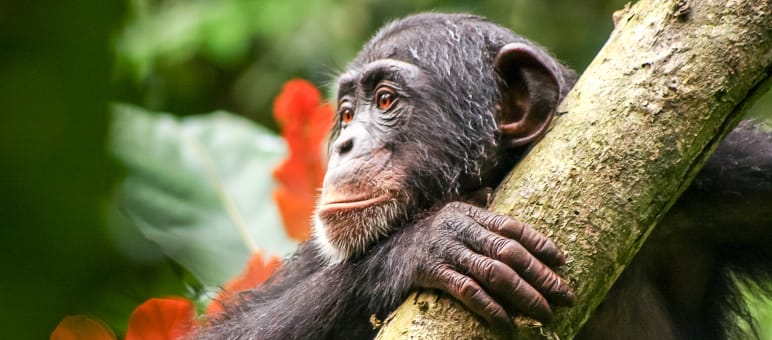
Liberia secures chimpanzee conservation
Liberia is home to an unusually large population of chimpanzees. The Wild Chimpanzee Foundation provides the research needed to establish protected areas and trains Eco-Guards from nearby communities. Women play a central role in this work.
In 2025, Eco-Guards patrolling Grebo-Krahn National Park covered around 1,050 kilometers in a zigzag route – the equivalent of walking the length of Britain and then some. They found fewer signs of illegal hunting than in the previous year.

Cambodia: Alternative Nobel Prize for Mother Nature Cambodia, December 2023
“Through innovative and often humorous protests, their activism defends nature and livelihoods, while upholding communities’ voices against corrupt and damaging projects,” says Ole von Uexküll, Executive Director of the Right Livelihood Foundation, which awards the Right Livelihood Award. “Despite arrests, legal harassment and surveillance, they continue to fight relentlessly for Cambodians’ environmental and civic rights.”
Many members pay a high price for their dedication: in July 2024, ten of them were sentenced to long prison terms.
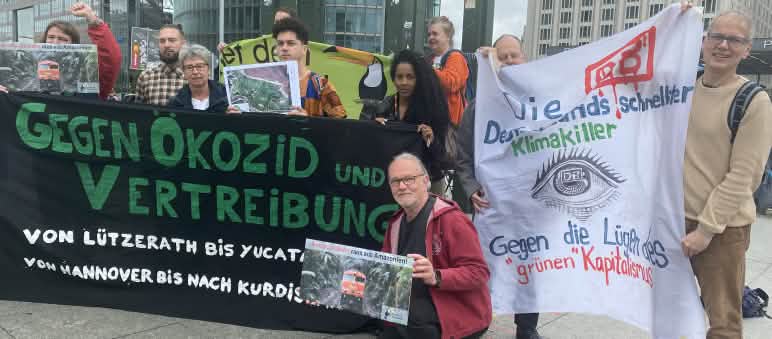
Brazil: Deutsche Bahn and the EU pull out of destructive Amazon project
In northeastern Brazil, Portuguese investors are planning a 520-kilometer freight railway through the Amazon region and an export port in the Atlantic mangroves. The project would serve exports of iron ore, soy, hydrogen and other raw materials.
Together with a network of organizations, we challenged the project in Brazil, Berlin, Brussels and Geneva. The result: Deutsche Bahn has withdrawn, and the European Commission will not fund it. But the project’s backers have not given up. Our partner Justiça nos Trilhos remains vigilant – and so are we.
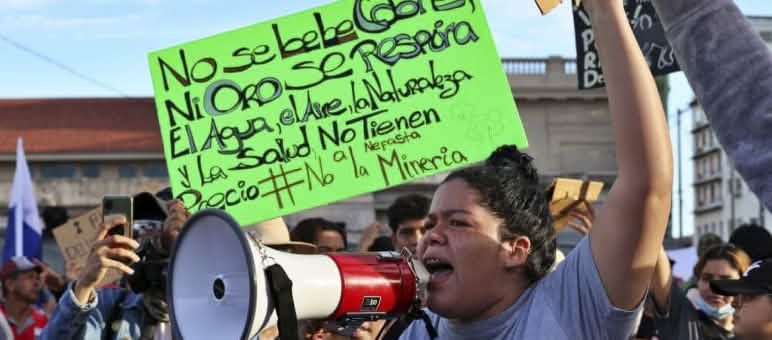
Panama: court overturns mining contract
In 2023, Panama’s Supreme Court declared the legal basis for the Cobre Panamá mine unconstitutional. For months, local communities and environmental groups had protested against the destruction of the country’s rich natural diversity. Panama now has a historic opportunity to choose a future without large-scale metal mining.
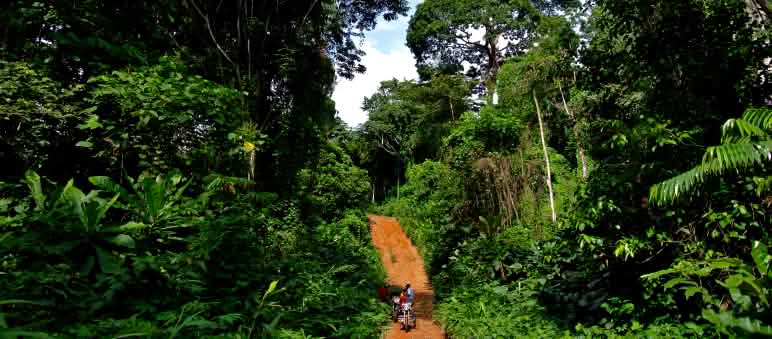
Nigeria: no superhighway through the rainforest
In Nigeria, Cross River State Governor Ben Ayade wanted to bulldoze a “superhighway” through rainforest – and underestimated the resistance. Bulldozers had already begun clearing a route through the forest, but the project was eventually abandoned. We were part of the coalition that stopped it and have worked closely with environmental defenders in the region ever since, especially the Indigenous Ekuri. Their forest, and their determination to protect it, show what forests need to survive.
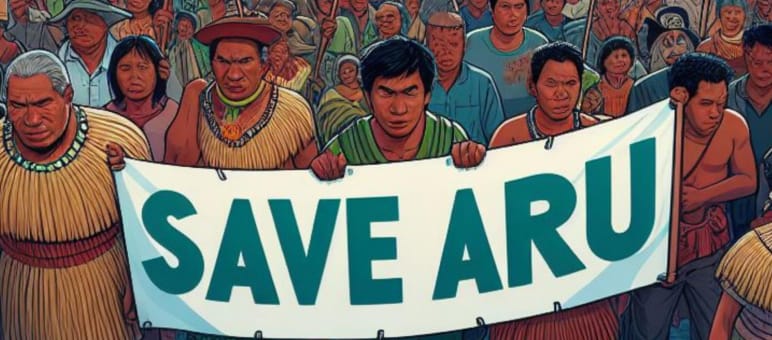
Indonesia: Aru Islanders protect one million hectares of forest
The Aru Islands, south of New Guinea, are covered in tropical rainforest and ringed by mangroves. For years, investors have targeted the islands’ forests and land for sugarcane plantations and cattle ranching. Strong Indigenous resistance has protected them from exploitation to this day.
“Rainforest Rescue connects us Indigenous people to the world and gives us strength and hope,” says Usman Ali of the Gayo people in Indonesia.
That message is both an encouragement and an obligation. Together, we will keep defending rainforests, the people who live in and depend on them, and the wildlife that calls them home – with your support.
- Section 1:
Image 1: Rettet den Regenwald, Image 2: kein, Image 3: Karl Ammann, Image 4: Rettet den Regenwald, Image 5: Rettet den Regenwald, Image 6: Rettet den Regenwald, Image 7: Rettet den Regenwald / Mathias Rittgerott, Image 8: Marianne Klute/Rettet den Regenwald, Image 9: Reiner Tegtmeyer, Image 10: Rettet den Regenwald - Section 2:
Image 1: RdR, Image 2: RdR, Image 3: RdR, Image 4: RdR, Image 5: RdR, Image 6: RdR, Image 7: RdR, Image 8: RdR, Image 9: RdR - Section 3:
Image 1: Rettet den Regenwald e.V., Image 2: Rettet den Regenwald e.V., Image 3: Rettet den Regenwald e.V., Image 4: Rettet den Regenwald e.V., Image 5: Rettet den Regenwald e.V., Image 6: Rettet den Regenwald e.V., Image 7: Rettet den Regenwald e.V. - Section 4:
Image 1: nicoleobermann, Image 2: IFAW/U. Steinert, Image 3: Stefanie Hess, Image 4: Rettet den Regenwald e.V., Image 5: Regionalgruppe Berlin, Image 6: Aceh Wetland Forum, Image 7: Sanz-Hess - Section 5:
Image 1: Collage RdR, Image 2: SOB, Image 3: World Rainforest Movement WRM, Image 4: Anne Pictet, Image 5: SADIA, Image 6: Robert/ Tunde Morakinyo, Image 7: CALG, Image 8: FKL, Image 9: Rita Glaus, Image 10: SOB - Section 6:
Image 1: Global Witness, Image 2: Pusaka, Image 3: Nicolas Neubauer, Image 4: WALHI Sulsel, Image 5: StopEACOP, Image 6: Alf Ribeiro/Shutterstock.com, Image 7: Christine Denck, Image 8: EPN - Section 7:
Image 1: Sonja Metzger/ WCF, Image 2: Mother Nature Cambodia, Image 3: Rettet den Regenwald / Stefanie Hess, Image 4: Radio Temblor, Image 5: Rettet den Regenwald / Mathias Rittgerott, Image 6: Forest Watch Indonesia