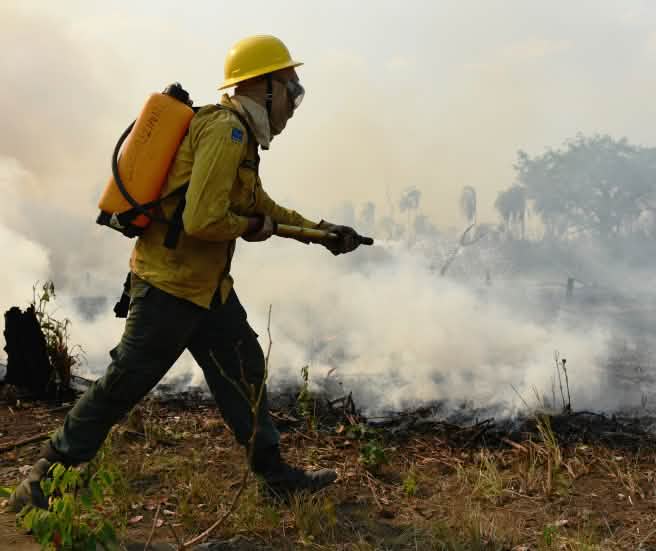
Every dry season, many tropical forests reach a breaking point. In Brazil, Indonesia, and other countries along the equator, fires tear through vast areas, damaging ecosystems and devastating local communities.
Almost all of these fires are man-made. They often spiral out of control, spreading into neighboring areas and destroying rainforests, savannas, and other ecosystems while threatening villages and the people who live in them.
Fire clears land for cattle, soy and palm oil
Arsonists destroy vegetation to turn the land into cattle pasture, soy monocultures, or oil palm plantations. Fire is the cheapest and most effective way to do it.
Public wildfire services are virtually nonexistent across these vast, often remote regions. So local residents have to fight the flames themselves. They need training, equipment, and public support to pressure policymakers. Those authorities must pursue the arsonists and the interests behind them, and stop burned forest and savanna from being turned into farmland.
Our partners are stepping in
Our partners Agro é Fogo in Brazil and APEL Green Aceh in Indonesia support communities in tropical forest regions with information, prevention, and equipment. They help not only put out fires but stop the blazes – and their causes – before they take hold.
In Brazil and Indonesia, fire season usually runs from July to November. In Indonesia, peat forests in the Tripa region on Sumatra are already burning. The flames are destroying habitat for orangutans, tigers, rhinos, and elephants.
El Niño
Climate researchers say the so‑called El Niño phenomenon is very likely to begin toward the end of this year. When it does, cold and warm Pacific Ocean currents reverse, with global effects on the weather: large parts of the Amazon and Indonesia become much drier, while regions such as South America’s Atacama Desert receive more rain.
In an El Niño year, wildfire risk rises sharply in drought-hit areas. Preparation matters.
Costs of equipment
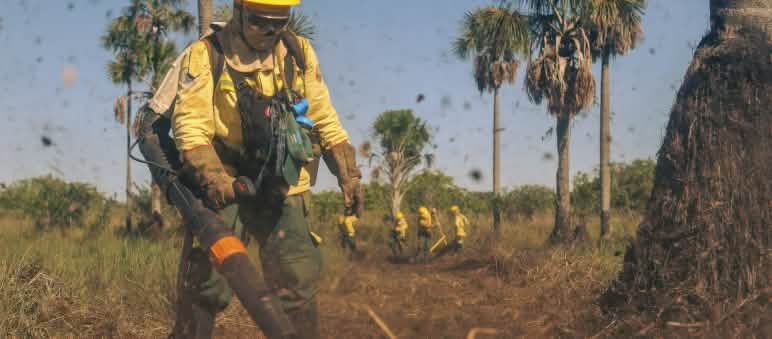
In northern Brazil, 273 euros is enough to fully equip one person with personal protective gear to fight forest and savanna fires. A water backpack with a spray pump costs 218 euros, and a portable blower costs 460 euros, bringing the total to 957 euros. Portable blowers are used to push ground-level flames in the opposite direction or clear flammable material such as dry leaves from firebreaks.
Examples of the cost of fire protection clothing and equipment for one person in Brazil, converted to euros:
| Item | Cost in euros |
| Protective trousers and jacket | 109 |
| T‑shirt | 7 |
| Balaclava | 13 |
| Goggles | 8 |
| Helmet | 27 |
| Leg guards | 31 |
| Boots | 45 |
| Gloves | 5 |
| Cap | 5 |
| Belt | 8 |
| Bush knife | 14 |
| Sheath for knife | 6 |
| Water backpack with spray pump | 218 |
| Portable blower | 460 |
| Total per firefighter | 957 |
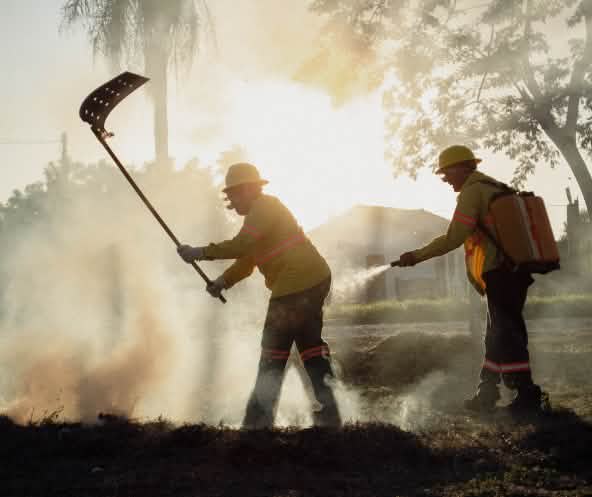
Agro é Fogo: preventing and fighting forest fires
Agro é Fogo’s network helps forest communities defend their territories against agribusiness-driven arson in the Amazon, Cerrado and Pantanal.

Protecting rainforests and peatlands in the Leuser ecosystem
APEL Green Aceh defends Leuser’s peatlands and tiger forests, led by Indigenous “masters of the forest”, women and young people.
We issue receipts for the previous year in February/March. With regard to the deductibility of your donation, please contact your local tax authorities.
Rainforest Rescue (Rettet den Regenwald e.V.) is registered as a non-profit organization in Hamburg, Germany.
We use encrypted (TSL/SSL) communication to protect your data against unauthorized access.
Recurring donations can be canceled at any time: just email us at info@rainforest-rescue.org.
Do you have questions about your donation?
Please email us at info@rainforest-rescue.org. We're happy to help you.