Brazil: Stop the judicial harassment of Indigenous forest defenders!
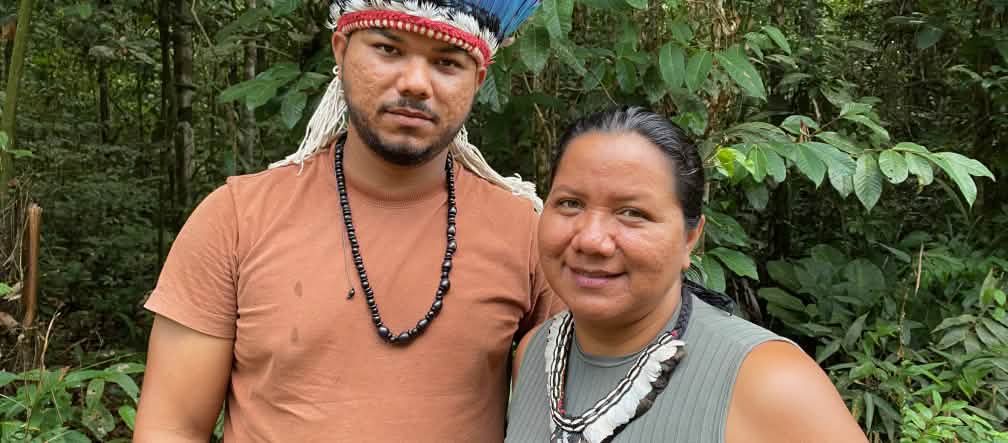
Indigenous leader Yuna Miriam Tembé is urgently calling for help. She is being persecuted on fabricated charges for standing up to palm oil companies’ forest clearing, land grabbing and violence in the Amazon rainforest. Authorities have fitted her with an electronic ankle monitor. She now fears for her life.
To: the Federal Public Prosecutor’s Office; National Foundation for Indigenous Peoples (FUNAI); National Human Rights Council; Program for the Protection of Human Rights Defenders; bodies that oversee the justice and security systems
“Stop the harassment of Indigenous leader Yuna Miriam Tembé in Pará’s Amazon rainforest and end her criminalization immediately.”On September 1, 2026, a court in Pará imposed “precautionary measures” on Yuna Miriam Tembé and three other Indigenous leaders. She is accused of kidnapping employees of a security company and extorting money from them. Miriam denies the allegations and has credible witnesses to support her account.
Her real offense: standing in the way of palm oil companies. Working with the authorities, they are trying to silence her with fabricated accusations, as she explains in a video.
Rainforest Rescue has visited Yuna Miriam twice in her territory, I’ixing. It lies in the Acará River valley in Pará state, at the heart of Brazil’s palm oil industry. For her people, this is home – not land to be cleared for yet another plantation.
For years, palm oil companies have expanded their plantations, fueling violent land conflicts. They obtain land titles without consulting local communities, seize the land and turn it into oil palm monocultures. They destroy biodiversity and contaminate the environment with pesticides and wastewater from palm oil mills.
Indigenous people and Afro-Brazilian Quilombola communities are losing their land and livelihoods. But they are resisting. They have organized and reclaimed parts of their ancestral land. Yuna Miriam’s persecution threatens that hard-won progress.
This is not the first time the police and courts have targeted her. She was previously detained for weeks in connection with a killing, until human rights organizations secured her release and had the proceedings annulled.
“The state is siding with private companies – against us and our rights. They want to silence us, use violence against us again and wipe us out so they can take over our territories,” Yuna Miriam explains.
Yuna Miriam must be free to defend her people’s territory without fearing for her life. Call on Brazil’s authorities to end her criminalization, protect threatened leaders and conduct a thorough, impartial investigation.
Sign and share the petition. Stand with Yuna Miriam and the communities defending their land and the Amazon rainforest.
Start of petition: 02/10/2026
On September 18, 2026, O Varadouro published an article titled “Ankle monitors for Indigenous people under threat in a land dispute: Pará’s escalating palm oil conflict.” It explains the situation and its wider context, showing how Indigenous leaders who have long spoken out against human rights violations continue to face constant pressure and uncertainty about their safety. They remain vulnerable despite their years of defending their people’s rights.
Further information:
- Video by Yuna Miriam Tembé on Instagram, published on September 27, 2026: https://www.instagram.com/reel/DdtjVE2IJvr/?stkn=MTAwZXI4NjI5MW00bQ==
- Instagram post dated September 27, 2026: https://www.instagram.com/p/DdrH9c4RTz1/?stkn=MTZuZHAzcjNveXh3Ng==
- Public statement by the Indigenous organizations I’ixing and AITVA (German translation)
To: the Federal Public Prosecutor’s Office; National Foundation for Indigenous Peoples (FUNAI); National Human Rights Council; Program for the Protection of Human Rights Defenders; bodies that oversee the justice and security systems
Protection for Indigenous leader Yuna Miriam Tembé Nunes and the Tembé people
Rainforest Rescue and thousands of people around the world are deeply concerned about the violence against Indigenous leader Yuna Miriam Tembé Nunes and her criminalization. We are also closely following the escalating land conflicts in Pará state affecting Indigenous peoples, Quilombolas and riverside communities in the Acará Valley.
The persecution she faces as the leader of the I’ixing Indigenous territory is not an isolated case. It reflects the reality facing countless traditional communities across the Amazon: They become targets of threats, violence and criminalization because they protect their territories, forests, rivers and ways of life from destruction by the agribusiness, mining and energy industries.
For years, Yuna Miriam has spoken out against land invasions, deforestation, threats and violence against Indigenous leaders. These leaders resist the expansion of the palm oil industry to protect the rainforest. In doing so, they safeguard the foundations of the Tembé Tenetehara people’s physical, cultural and spiritual survival. The violence and land conflicts are directly linked to economic interests in these territories and their resources.
Her territory, I’ixing, lies in a region profoundly affected by the expansion of the palm oil industry. The region was once dominated by primary forests and stands of Brazil nut and açaí trees, alongside other areas traditionally used by the communities. The continuing spread of oil palm monocultures has drastically altered the landscapes, waterways, biodiversity and ways of life developed over generations.
A court in Pará imposed precautionary measures on Yuna Miriam Tembé in connection with incidents in which, according to public witness statements, documents presented in a report and accounts from academics who followed the events, she was not involved. Elielson Silva, a researcher at the Federal Rural University of Amazonia (UFRA), emphasizes that the accusations against her have no factual basis: Neither she nor other Indigenous people from the I’ixing territory were present at the incident under investigation.
We, the signatories to this letter, are gravely concerned that an Indigenous leader widely recognized for her commitment to defending her people’s rights has been drawn into legal proceedings without publicly available evidence of her involvement in the incidents under investigation.
The authorities’ actions reflect a broader pattern across the Amazon: Human rights defenders have been arrested or restricted in carrying out their traditional responsibilities. They have also faced repeated attempts to link them to incidents unrelated to their work.
For Rainforest Rescue, protecting Indigenous peoples also means protecting the Amazon. Their territories are essential to conserving biodiversity, protecting rivers and other water bodies, regulating the climate and preserving traditional knowledge fundamental to the planet’s future. When Indigenous leaders are threatened or persecuted, the consequences extend beyond one person: The threats extend to the entire network that safeguards ecosystems, cultures and people.
For this reason, we stand in solidarity with Yuna Miriam Tembé Nunes, the Tembé Tenetehara people and the Quilombola and riverside communities of the Acará Valley. Despite growing pressure and conflict, they continue to resist and defend nature and their territories.
Our demands
Given the seriousness of these incidents, we call on the Brazilian authorities – particularly the Federal Public Prosecutor’s Office, the National Foundation for Indigenous Peoples (FUNAI), the National Human Rights Council, the Program for the Protection of Human Rights Defenders and the bodies that oversee the justice and security systems – to launch a thorough, impartial and transparent investigation into the allegations without delay. The investigation must establish the circumstances and grounds for the judicial measures imposed on Indigenous leader Yuna Miriam Tembé Nunes. The authorities must also investigate the allegations of threats, violence, land invasions and possible abuses against leaders of Indigenous, Quilombola and other traditional communities in the region.
We also call on the authorities to implement effective measures to protect threatened leaders and ensure that they can freely defend their peoples, nature and territories. This freedom is guaranteed by Brazil’s Federal Constitution and the international human rights agreements to which Brazil is a signatory.
Defending the forest means defending life.
Defending territories means defending the future.
Rainforest Rescue (Rettet den Regenwald e.V.), Hamburg, October 1, 2026.
Video by Yuna Miriam Tembé on Instagram, published on September 27, 2026: https://www.instagram.com/reel/DdtjVE2IJvr/?stkn=MTAwZXI4NjI5MW00bQ==
Varadopuro, September 18, 2026. INCRIMINADOS PELA LUTA. Tornozeleiras para indígenas ameaçados em disputa territorial: a escalada do conflito do dendê no Pará: https://ovaradouro.com.br/tornozeleiras-para-indigenas-ameacados-em-disputa-territorial-a-escalada-do-conflito-do-dende-no-para/
O Varadouro, September 18, 2026. INCRIMINADOS PELA LUTA. Tornozeleiras para indígenas ameaçados em disputa territorial: a escalada do conflito do dendê no Pará: https://ovaradouro.com.br/tornozeleiras-para-indigenas-ameacados-em-disputa-territorial-a-escalada-do-conflito-do-dende-no-para/