

Agro é Fogo: preventing and fighting forest fires
Arson is tearing through the Amazon, Cerrado and Pantanal, driven by agribusiness and land grabbers, while communities are left to fight the flames on their own. With Rainforest Rescue’s support, Agro é Fogo – a network of more than 40 Brazilian groups – is building local firefighting capacity and pressuring authorities to act.
Project Overview
Project FocusEcosystems
Project Objective Preventing and fighting forest fires
Activities Political pressure and public awareness campaigns, training, and equipment for firefighting
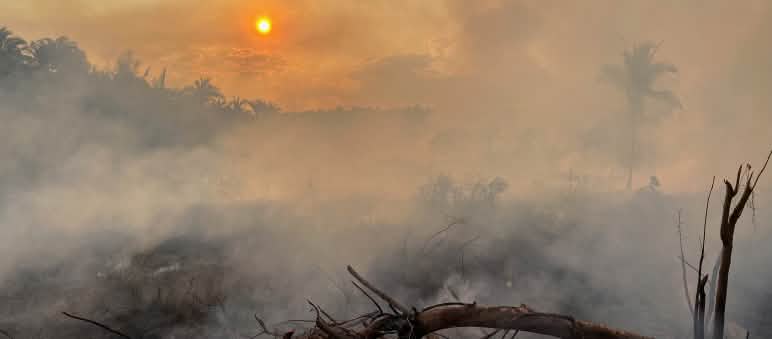
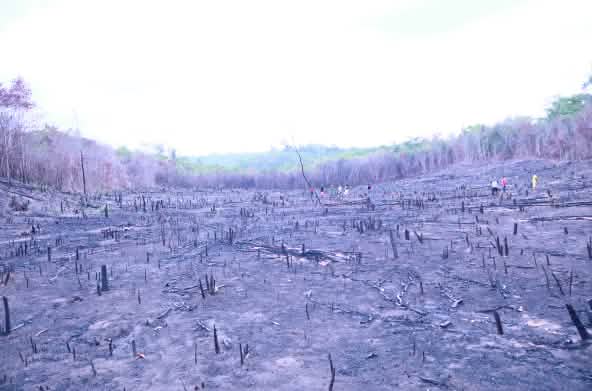
99 percent of all fires in the Amazon, the Cerrado savannas and the Pantanal are caused by people. Most are acts of criminal arson carried out by large landowners and agribusiness corporations. Fire is not only the cheapest and most effective way to clear vegetation quickly and make room for soy, corn, eucalyptus, cattle pasture and other export crops. It is also a deliberate strategy to destroy the livelihoods of Indigenous peoples and traditional communities, drive them from their land and seize their territories.
Our partners in the Agro é Fogo network document and confront these crimes. Today, more than 40 organizations across Brazil are part of the coalition. The name translates as “Agribusiness is fire,” a blunt reminder of the deadly link.
Fires are weapons in the hands of those who exploit natural resources and see traditional communities as obstacles,” Agro é Fogo explains.

The coalition works to deepen public debate and push for policy change, going far beyond the satellite images and deforestation figures the government releases. It publishes analyses and political statements that show the true scale of what is happening in the forests – and what communities living there face every day.
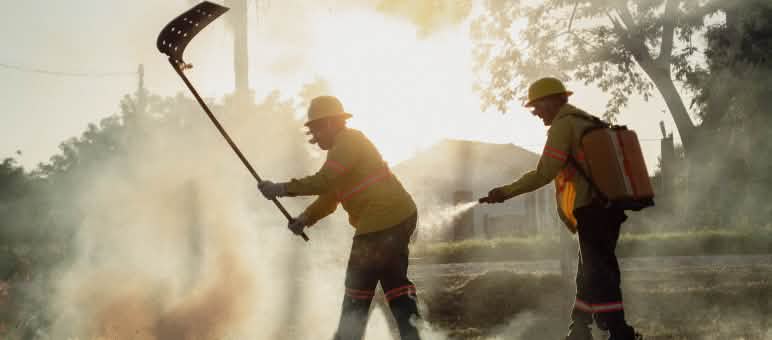
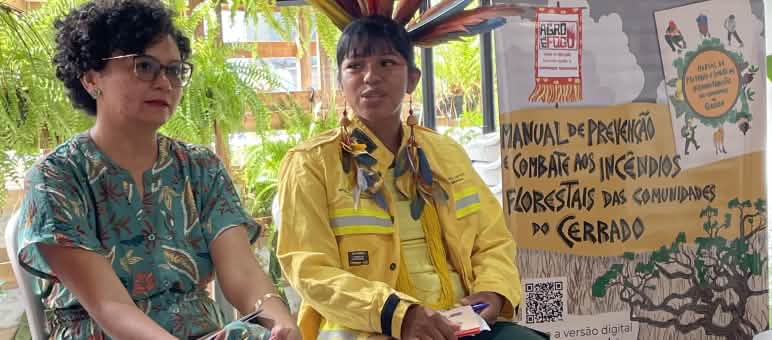
Agro é Fogo also shares practical knowledge on how local communities can prevent and fight fires. One example is a handbook on preventing and fighting forest fires in the Cerrado, funded in part by donations to Rainforest Rescue.

Our cooperation with Agro é Fogo began in early 2025. It is designed to give communities affected by arson the information and equipment they need to prevent and fight fires. Another key task is to systematically document reports of arson and forward them to the public authorities responsible for investigation, prosecution and sentencing.
ACEIRO joint action fund
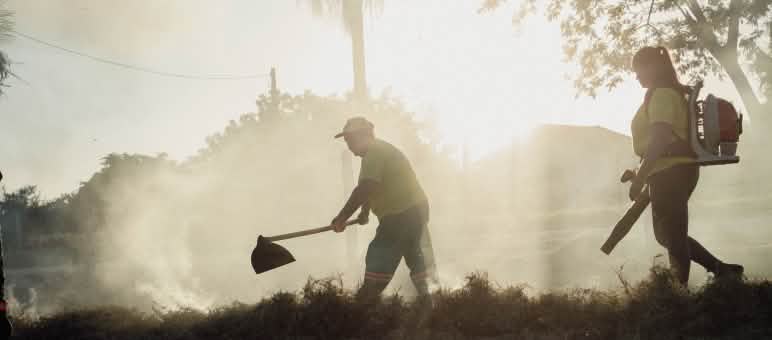
Our support for Agro é Fogo also includes funding equipment for fire protection and firefighting. To that end, the ACEIRO fund – the Portuguese term for a firebreak – was set up at the end of 2025. Partner organizations can apply for this support through the fund. To our surprise, 67 applications came in within a very short time, and eleven have already been approved.
The concept strengthens local responsibility, equips community firefighting teams, supports traditional and agroecological practices and enables emergency measures to address fire damage.

“Agro é Fogo’s goal is to support more initiatives so that more Indigenoud peoples and communities have the means they need to maintain and protect their ancestral territories,” says Agro é Fogo’s executive director, Jaqueline Vaz.
Equipment costs for volunteer firefighting teams
- Personal protective clothing and hand tools: 301 euros
- Backpack extinguisher with water sprayer: 218 euros
- Portable blower: 460 euros
When fires break out, communities usually cannot rely on official fire brigades. These services are poorly equipped for forest and brush fires: they lack trained staff and suitable gear, and the sheer number of fires across such vast areas quickly overwhelms them. As a result, people have to train themselves, buy their own equipment and take preventive measures such as creating firebreaks to slow the spread of the flames.
Agro é Fogo was born in response to the infamous “Day of Fire”
Agro é Fogo was created in 2020 in response to the infamous “Day of Fire.” In 2019, criminal large landowners and land grabbers in the state of Pará coordinated to set vast areas of the eastern Amazon ablaze. In doing so, they advanced the destructive, anti-forest and anti-Indigenous policies of then far-right president Jair Bolsonaro.
Agribusiness has a very tight connection to criminal arson in Brazil,” Agro é Fogo reports
Under President Lula da Silva’s current government, forest protection and human rights are back on the agenda. At the same time, his administration continues to prioritize economic growth and exports. Year after year, the arsonists return because powerful economic and political interests stand behind them, above all agribusiness.

Intact primary forests do not burn. The vegetation and air beneath the canopy of giant trees are simply too moist. But once people fragment the rainforest – when logging companies punch gaps in the canopy by felling tropical timber, and heavy skidders crush and tear through large swaths of vegetation or clear them for logging roads – the forest dries out and becomes flammable.
That is why the most devastating fires are concentrated in secondary forests, where human activity has already altered the vegetation. A third of all fires are recorded in just two states: Maranhão and Pará. There, in the eastern Amazon and the Cerrado savannas, the so-called agribusiness frontier keeps advancing. Natural landscapes are turned into vast industrial monocultures, and the people who live there are pushed out.
China is the main buyer of agricultural and timber products, but the EU also plays a major role. A free trade agreement between the EU and the South American Mercosur states – Brazil, Argentina, Paraguay and Uruguay – is pending ratification. Under the deal, exports are set to grow, adding further fuel to the fire, Agro é Fogo warns.
Further reading:
Handbook on preventing and fighting forest fires in Cerrado communities (Portuguese)


The rainforest
A green sea of ferns, mosses, vines and ancient trees. Iridescent butterflies and colorful birds. Flowers in every hue of the rainbow. The “green lung” is a natural wonder of the world. Find out more about the world’s most diverse, fascinating and threatened ecosystem.
COP17 on desertification: stewards of the land have no say in its future
Without roots, water has nothing to slow it: 700 dead in Nepal. COP17 ends without rules, and the Indigenous peoples with the answers do not decide.