House of Essences: keeping traditional medicine knowledge alive
Deep in Brazil’s Amazon rainforest, a project is making Indigenous leader Álvaro Tukano’s vision real. Developed with the community and partner Instituto Nova Era, it keeps ancestral knowledge of medicinal plants alive in the Balaio Indigenous territory while strengthening culture and spirituality.
Project Overview
Project FocusRainforest Defenders
Project Objective Preserving the knowledge of the Tukano and creating a source of income
Activities Training in the production of plant essences and establishing a medicinal garden
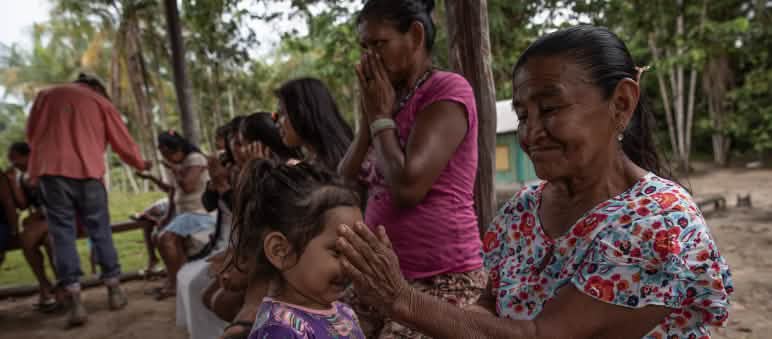
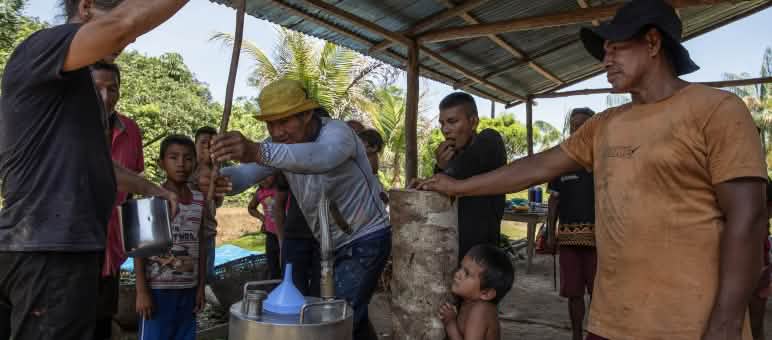
“This work is very good. It must continue. I’m very happy that this is happening here today,” says Marinilce, a young woman from the Indigenous territory of Balaio. She is one of 30 Indigenous participants – children, young people, elders, women, and men – taking part in hands-on training organized by our partner Instituto Nova Era with funding from Rainforest Rescue. Instituto Nova Era is providing the training in the community.
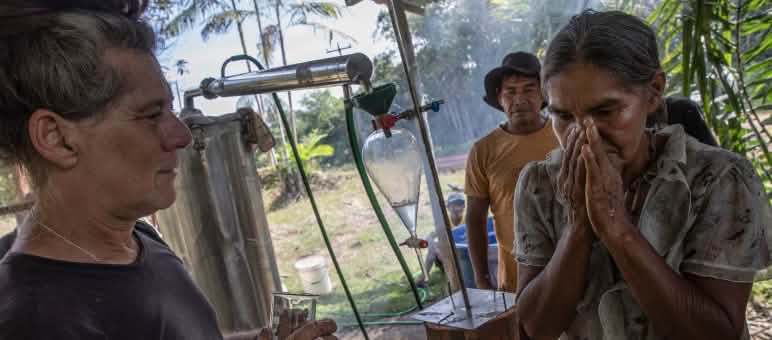
A gleaming stainless-steel distillation unit, along with other equipment, was purchased and transported into the remote rainforest area. There, it was formally handed over to the Indigenous community and put into operation during the course.
“I’m here with my colleague Diego at the request of leader Álvaro Tukano and Instituto Nova Era,” Carlos Roberto Gallo explains to the assembled group.


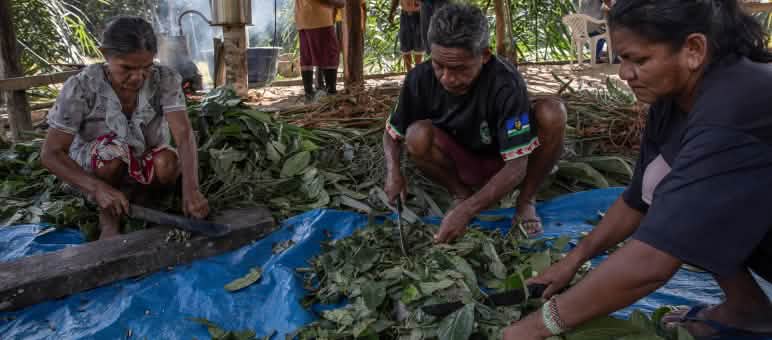
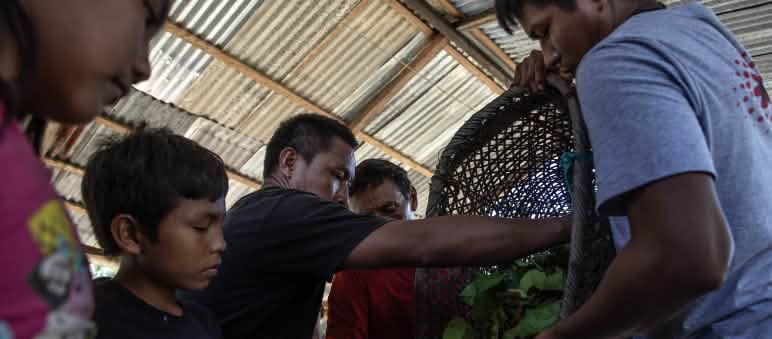
Under his guidance, participants load a steam boiler with leaves and other plant material, including bark and seeds gathered and prepared in the forest.
“I do this out of my deep love for the traditional medicine of Indigenous peoples. I teach people how to make medicine. We know that you have extensive knowledge and tremendous strength,” says Carlos.
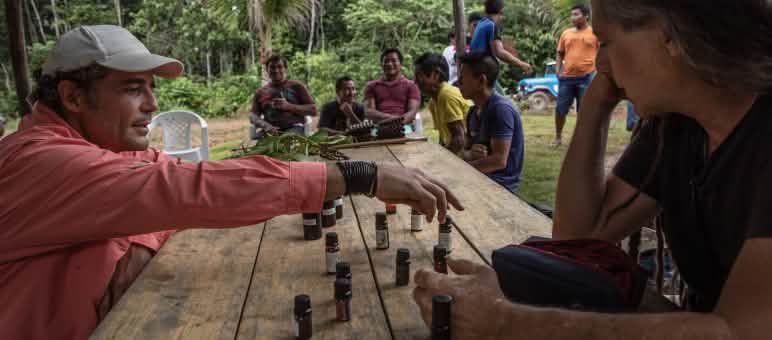
The group secures the clamps and begins heating the boiler. Steam and pressure extract and distill essences and oils from the plants. At the end of the session, everyone places a few drops of the oils and essences they have produced on their hands and inhales their scent.

“I never thought that one day someone would come and teach us this. I had always known that these plants contain oil because I had seen it elsewhere. But I did not know how to extract it. Today, we learned how,” says Marinilce.

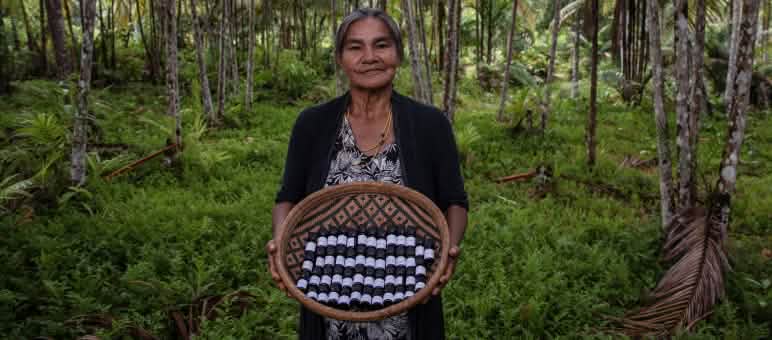
The participants have also developed their own community brand. Its visual identity draws on traditional knowledge and the territory. With INE’s support, the group designed labels and product descriptions that identify the essences as traditional Indigenous products. This strengthens cultural identity and adds value to the products. The first batch of samples have already brought in just over €800.

Participants have created seedbeds and planted cuttings to establish medicinal plant gardens. This will make medicinal plants more accessible and help pass this knowledge on to young people.
The project was launched at the initiative of Indigenous leader Álvaro Tukano: “We must never forget where we come from. We must revive our traditions and uphold our ethics,” he explains. “If we lose our knowledge, we become dependent on the state healthcare system, which is expensive and inefficient.”
The project is bringing his vision to life. Involving young people is especially important to him. Addressing them, he adds: “Keep things simple and do not let anyone manipulate you.”
The Tukano Indigenous territory of Balaio
Several hundred people from Indigenous communities including the Tukano live in the Balaio Indigenous territory (2,570 km2) in northern Amazonas, Brazil. Mountain ranges and table mountains rise above the rainforest. Its extraordinary biodiversity has barely been studied by scientists.
Traveling and obtaining supplies are major challenges for residents of this remote area near the Venezuelan border. The nearest town of any size, São Gabriel da Cachoeira on the Rio Negro, is 100 km away via an unpaved, muddy road that is often barely passable.
Plant essences are well suited to generating a small income. Residents can gather leaves in the rainforest and grow medicinal plants in their gardens. The bottled essences have a long shelf life, and their small size and low weight make them easy to transport.
Our partner Instituto Nova Era documented the training on video:
Original audio with English subtitles (footage by Gabriela Vivacqua – @gabrielavivacqua and editing by Matheus Vieira)
Original audio with Portuguese subtitles (footage by Gabriela Vivacqua – @gabrielavivacqua and editing by Matheus Vieira)