Toxic nickel waste puts Morowali’s people and coast at risk
Indonesia: Nickel and battery production for electric vehicles at Morowali Industrial Park in Sulawesi generates vast quantities of toxic waste. After landslides at waste dumps and fatalities, our partners at JATAM Sulteng are suing the governor over his failure to act. Manufacturers and buyers of electric vehicle batteries also bear responsibility.
Death by toxic nickel sludge
Environmental advocates in Sulawesi condemn the propaganda around “environmentally friendly” electric vehicles as hypocrisy. Extracting the raw materials leaves a deep trail of deforestation, poisoning, accidents and deaths on the ground.
On February 18, 2026, a massive landslide of toxic sludge from battery-material production swept through the Morowali Industrial Park (IMIP). One worker died.
On March 4, 2025, also at IMIP, the dam of a pond holding mining waste from QMB New Energy Materials burst. The highly toxic residues containing heavy metals buried four workers. Indonesia’s Ministry of Environment secured evidence of unauthorized tailings disposal. The company is alleged to have failed to comply with safety regulations for handling the waste.
Environmental advocates in Sulawesi are outraged. The latest accidents are part of a long series of disasters, fires, deaths and dam failures at IMIP’s waste piles. Then there are the devastating impacts of nickel ore extraction and nickel production on nature and the people of Morowali. They are organizing protests and taking legal action.
QMB New Energy Materials and other nickel companies have turned the Morowali region into a “ticking time bomb.”
Resistance through the courts
On August 11, 2026, proceedings began at the Administrative Court in Palu against the provincial government of Central Sulawesi over its alleged failure to act on environmental-law violations by PT QMB New Energy Materials and PT Berkah Morowali Sejahtera.
Our partner organization JATAM Sulteng filed the lawsuit. Moh Taufik, its director and a lawyer, testified that the disposal of highly toxic and hazardous B3-category waste was allegedly carried out without the required technical permit. He believes that inadequate oversight and the local government’s failure to take administrative action were likely among the factors that led to the two landslides at the tailings piles in Morowali. The deaths and damage to the coastal ecosystem were allegedly the result of this failure to act. The governor of Central Sulawesi had failed to meet his legal obligation to protect people and the environment from the impacts of mining-waste disposal.
Suppliers to the auto industry
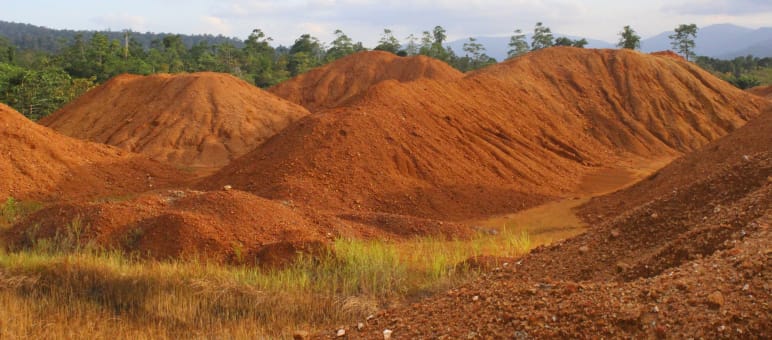
PT QMB New Energy Materials operates a US$3.7 billion facility that produces battery materials at IMIP. QMB uses high-pressure acid leaching (HPAL) technology to extract nickel from low-grade laterite ore. HPAL uses extreme heat, high pressure and concentrated sulfuric acid. What remains is a fine-grained reddish sludge with an extremely hazardous chemical composition, including heavy metals such as chromium(VI). Around 1.4 to 1.6 tons of sludge are produced for every ton of nickel, or 19.2 million tons of highly toxic and corrosive mining waste each year.
When carcinogenic chromium(VI) and other metals enter rivers or coastal waters, they are absorbed by plankton and fish. The toxins eventually enter the human body through the food chain. When sludge is washed into the sea, the clouded water causes coral reefs to die. The acid also harms many marine organisms. On land, the viscous sludge blocks the supply of oxygen to the soil. The land becomes infertile, plants die and the water becomes undrinkable.
Responsibility of electric vehicle manufacturers
Automakers often deny responsibility, stating that they do not source directly from companies such as PT QMB. Instead, they buy finished battery components and battery cells from giants such as the Chinese corporation CATL or South Korea’s EcoPro BM, both shareholders and key partners of QMB.
Leading European automakers including Volkswagen, BMW, Mercedes-Benz and Stellantis source battery cells directly from CATL. EcoPro BM, a producer of precursor and cathode materials, also supplies the European market indirectly through South Korean and European cell-manufacturing giants such as Samsung SDI. Direct supply by CATL is under discussion.
European CATL customers
- Volkswagen sources cells from CATL’s German plant in Arnstadt, Thuringia, and elsewhere.
- BMW equips electric models in its “New Class” with cells produced in Debrecen, Hungary, and elsewhere.
- Mercedes-Benz is a strategic partner and is supplied by CATL in Europe.
- Stellantis is building a joint-venture plant with CATL for LFP batteries in Zaragoza, Spain.
Because of the fatal workplace accidents caused by landslides of toxic mining waste, supply-chain law also applies to indirect business relationships:
- Electric vehicle manufacturers are explicitly required to analyze risks linked to indirect suppliers such as PT QMB New Energy Materials. They must develop plans to minimize and prevent harm, and press direct business partners such as CATL or EcoPro BM to introduce safer methods for disposing of mining waste.
- In cases of particularly serious violations, such as disregarding occupational-safety obligations and causing harmful soil and water pollution, the law requires the business relationship to be terminated.
Highly toxic and environmentally harmful B3-category residues from extraction, smelting and chemical processing in the nickel industry
- Tailings from the HPAL process contain highly concentrated sulfuric acid and toxic heavy metals such as hexavalent chromium (chromium VI), cadmium, arsenic, mercury and lead.
- Nickel slag (in part)
- Effluents: Acidic wastewater contains nickel salts, cobalt, iron and manganese. When they enter rivers or the sea, coral reefs and marine ecosystems die.
- Other operational B3-category waste
- Waste oils, lubricants and filter dust from the exhaust systems of the coal-fired power plants that supply electricity to nickel smelters.
This page is available in the following languages:
Women leading in Sulawesi: Protecting the forest from nickel corporations
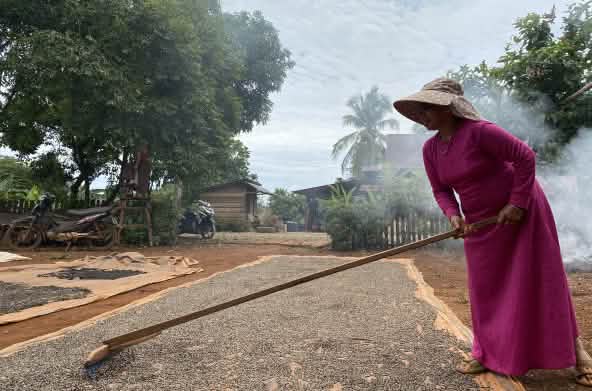
Women in Sulawesi are taking up the fight against land grabbing, environmental destruction and criminalization – and yet more nickel mines.
Yes to the ‘green revolution' – but without copper and nickel from the rainforest!
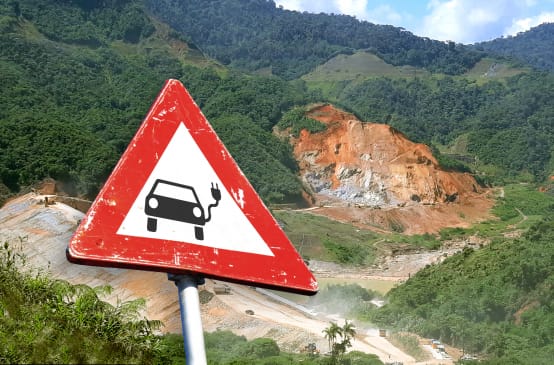
We consume far more metals than is sustainable, and electric cars are exacerbating the problem. We need to transition to a circular economy and new mobility concepts.