COP17 on desertification: stewards of the land have no say in its future
It is the ice at altitude and the roots of trees that hold water and soil in place. Where they are missing, the ground gives way: on August 26, a glacial flood swept through Rasuwa in Nepal, killing more than 700 people. Meanwhile, COP17 on desertification closed without an agreement on drought. Indigenous peoples and low-impact communities have the solutions – they just don't have the power.
On August 26, a flash flood ravaged Nepal’s Rasuwa district, killing at least 734 people and leaving nearly 2,500 missing. According to the United Nations University, the disaster was triggered when part of a Himalayan glacier collapsed, blocking the river and setting off an avalanche and flooding. It was not an isolated event. A United Nations study finds that glacial lake outburst floods (GLOFs) in the Hindu Kush Himalaya have increased fivefold since 1950.
A planet losing ground
A slope that crumbles. Soil that no longer holds anything back. Seven thousand kilometers away, the same story was under discussion in a conference hall in Ulaanbaatar. From August 17 to 28, the Mongolian capital hosted COP17 of the UN Convention to Combat Desertification (UNCCD) – the only legally binding international agreement addressing land degradation. Most of the Convention’s 197 Parties attended, alongside more than 400 organizations and community delegations.
The numbers behind the table
Forty percent of the land humanity depends on for its livelihoods is already degraded. Nearly three and a half billion people are affected.
Droughts have increased by sixty-six percent since 2000. By 2030, water demand is projected to exceed available supply by forty percent. Eighty-five percent of those affected live in low- and middle-income countries.
Land degradation drives a significant share of migration by undermining food security and incomes. In Mongolia, the host country, desertification affects seventy-seven percent of the territory, while average temperatures have risen by two degrees Celsius over the past eighty years.
The negotiation that never happened
And here is the part worth reading twice. COP17 concluded on August 28 with a financial package of 1.3 billion US dollars for land restoration and drought resilience, including 644.5 million dollars in new funding. But the Parties failed to agree on a global framework for drought. The negotiations have been postponed until COP18, scheduled for 2028 in Sharm el-Sheikh, Egypt, on the Red Sea.
This was not the first time. The same issue remained unresolved at COP16 in Riyadh, where countries failed to agree on a binding instrument and deferred the decision to – of all places – Ulaanbaatar.
In the final days of the summit, negotiators remained divided on four key issues: the global drought instrument, funding for restoration, rangeland management, and the participation of Indigenous Peoples and local communities.
African nations, small island states, Amazonian countries such as Brazil, and other vulnerable nations called for stronger international action, including binding agreements where necessary. Some developed countries raised concerns about costs and possible overlap with existing mechanisms. A small group of Parties, led notably by the United States, said it would reject any international instrument on drought – whether binding or voluntary.
The result: money is on the table, but there are no multilateral rules.
“Nature-positive”: the green label trick
Several decisions were adopted: to protect, sustainably manage, and restore rangelands and grasslands; to support pastoralists and local communities; and to promote a transition toward so-called “nature-positive” agriculture. That last term deserves a closer look.
It has no binding definition, no qualification thresholds, and no verification mechanism. No one has to prove a claim before using it.
This is the kind of label we know well from the forestry sector, where certification schemes such as the Forest Stewardship Council (FSC) have allowed practices that should have been stopped. Large-scale agriculture labeled “nature-positive,” but without measurable criteria, could work in much the same way: granting a license to claim sustainability in advance while allowing practices that may ultimately harm the environment.
The Mongolian presidency also launched a 1.2 billion US dollar Rangelands Flagship Initiative, comprising 45 projects and accounting for the largest share of the 1.3 billion dollar package announced at the close of the summit. These are concrete measures. But they are programs designed for communities rather than with them. Funding is allocated from above and remains centrally controlled.
Rainforest Rescue’s view
Nepal and Mongolia tell the same story from two different perspectives: when vegetative cover is lost, the land becomes less able to retain water, sediment, and biodiversity. At higher elevations, ice performs this function; lower down, tree roots do. It is one connected system, working across the landscape.
In Rasuwa, the collapse occurred above the treeline, where there are no trees. But the wave then traveled for several kilometers down the slopes before reaching settlements. Along that route, roots mattered. A wooded slope slows water, stabilizes the ground, and absorbs part of the debris. A bare slope offers no resistance. It becomes a chute. The same volume of water can mean either a flood or a catastrophe, depending on what stands in its path.
Protecting forests and conserving biodiversity are among the most effective ways to prevent further desertification. No technological fix can replace an intact forest or rangeland carefully managed by local communities who have lived in these regions for generations.
What is missing is not solutions, but the political influence of those already putting them into practice. The knowledge and low-impact economic models of local and Indigenous communities need a stronger voice – not to be reduced to a pavilion on the margins of negotiations.
As long as 500 Indigenous representatives in Ulaanbaatar can speak but have no decision-making power, and a handful of states can block any common instrument, we will keep counting the dead downstream.
This is not some “distant” climate issue
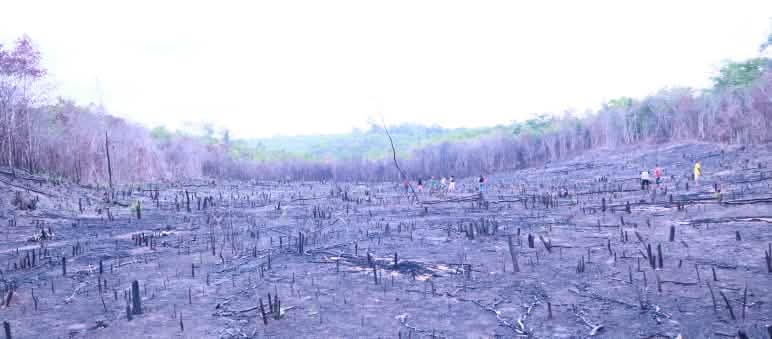
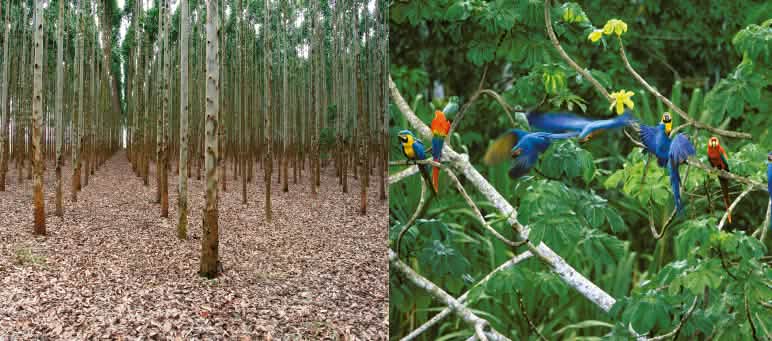
Land degradation, desertification, and deforestation are different views of the same process. Forests are cleared for monocultures such as soy, oil palm, or eucalyptus, as well as for logging and mining for copper or nickel. Once the roots are gone, the soil loses its anchor. Runoff increases and infiltration declines, washing away fertile soil, raising flood risks, and worsening drought. Eventually, the land dries out and communities are forced to leave. In mountain regions, where ice regulates water in the absence of vegetation, this process can accelerate and become deadly within hours.
COP17 took place during the International Year of Rangelands and Pastoralists. It was a major opportunity to recognize that people who have cared for these lands for centuries have essential knowledge for managing them today.
In our view, that opportunity was barely taken.
Meanwhile, we will keep exposing those responsible for forest destruction and supporting people who defend their lands through our projects and the petitions we organize with local communities and grassroots organizations.
Official sources and further reading
- Official COP17 UNCCD decisions and documents: https://www.unccd.int/cop17/official-documents
- Official website of the COP17 presidency, Ulaanbaatar: https://unccdcop17.org
- Euronews, COP17 in Mongolia: finding solutions to land degradation: https://www.euronews.com/2026/08/22/cop17-in-mongolia-finding-solutions-to-land-degradation
- Down To Earth, on the Rasuwa event and Himalayan glacial lake outburst floods (GLOFs): https://www.downtoearth.org.in/natural-disasters/un-expert-explores-seismic-linkage-to-nepal-disaster-warns-of-cascading-effects-and-holds-climate-change-responsible
Usually referred to simply as FSC in English. Founded in 1993, this international nongovernmental organization runs a voluntary certification scheme for timber and timber products. The FSC label states that the wood comes from forests managed according to its standards.
This page is available in the following languages:
Philippines: stand with the Indigenous resistance to nickel mining in Palawan!
Philippines’ last ecological frontier, Palawan Island, is now ground zero for the relentless advance of nickel mining. Please sign the petition.
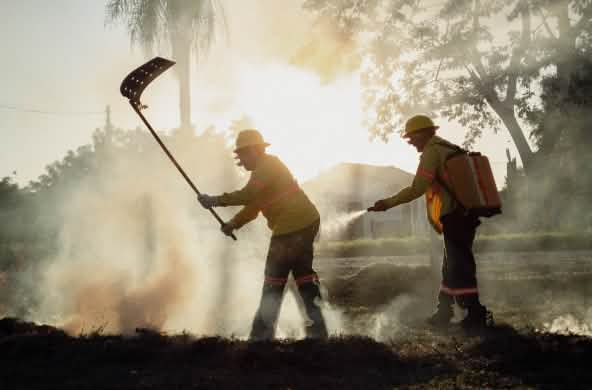
Agro é Fogo: preventing and fighting forest fires
Agro é Fogo’s network helps forest communities defend their territories against agribusiness-driven arson in the Amazon, Cerrado and Pantanal.

Supporting rainforest defenders
Rainforests are in particularly good shape wherever Indigenous people live and local communities are committed to conservation.