Brazilian partners condemn the impacts of soy farming
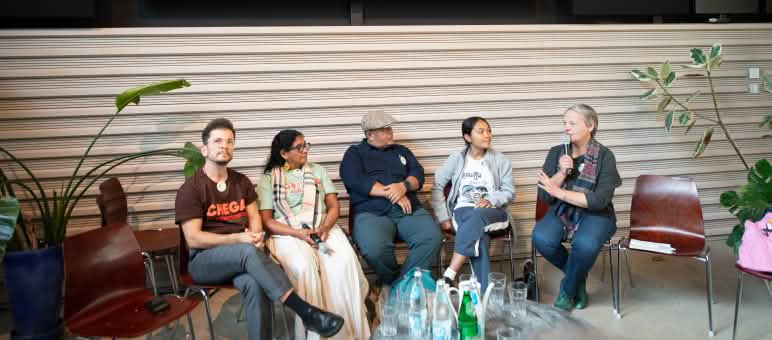
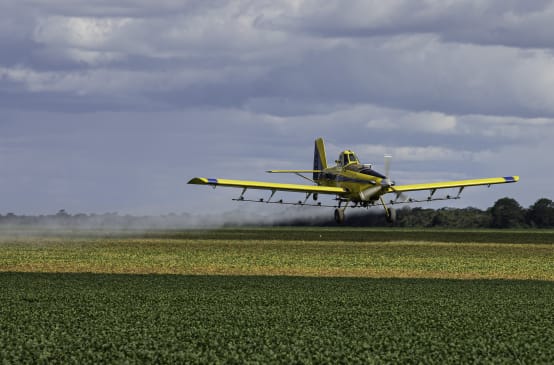
At Rainforest Rescue’s 40th anniversary event in Berlin, Brazilian partner organizations held a seminar on the impacts of soy farming in Brazil. Drones and aircraft spray pesticides over vast areas – including forests, waterways, villages and people. The pesticides include highly toxic chemicals banned for use in the EU.
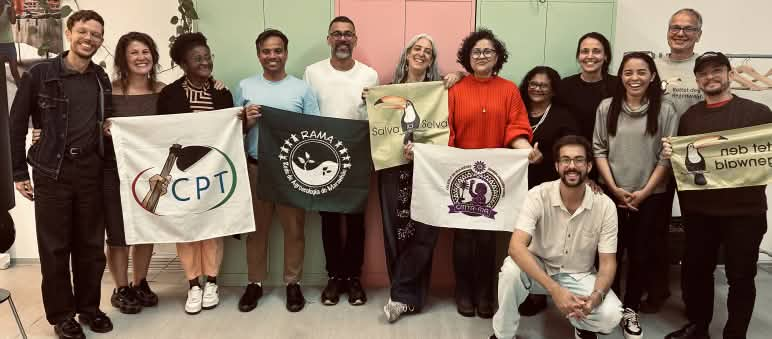
The shared message of our five partner organizations from the state of Maranhão was stark: “Your consumption of soy and other raw materials from Brazil brings us deforestation, land grabbing, violence and poisoning. A pesticide war is being waged against us. This is eco-genocide.”
The Brazilian delegation’s program of events and meetings, organized by Rainforest Rescue, began at the Spore cultural center in Berlin. Rainforest Rescue celebrated its 40th anniversary there in mid-September under the theme “Come with us into the rainforest.”
The group presented reports and studies documenting the impacts of intensive pesticide use and the environmental and social destruction in the Cerrado savannas and the Amazon region. The program also included two short documentaries.
A video on pesticide use in Maranhão:
“Highly toxic pesticides produced by European companies and banned for use in Europe should not be exported from Germany to South America,” said Marcia Palhano of the Pastoral Land Commission of Maranhão (CPT MA).
“A study conducted in seven communities in collaboration with the Osvaldo Cruz Foundation detected 12 pesticides, six of them banned in the EU. Some substances were found at more than 300 times the legal limits,” said Bruno Santiago of the National Campaign in Defense of the Cerrado.
“We therefore call for the suspension of certification for supposedly ‘sustainable soy’ in our region,” said Raimundo Alves of the Association for Health Education and Agriculture (ACESA) in Maranhão.
“There is no sustainable soy. It is greenwashing and consumer deception,” added Linalva Cunha Silva of the Rural Women Workers’ Collective (CMTR).
“We call for the immediate end of the ‘Alliance for Sustainable Soy’ program run in Maranhão by Germany’s state-owned development agency, the Deutsche Gesellschaft für Internationale Zusammenarbeit (GIZ), with funding from the Federal Ministry for Economic Cooperation and Development (BMZ),” said Ariana Gomes of the Maranhão Agroecology Network (RAMA).
Further meetings in Berlin
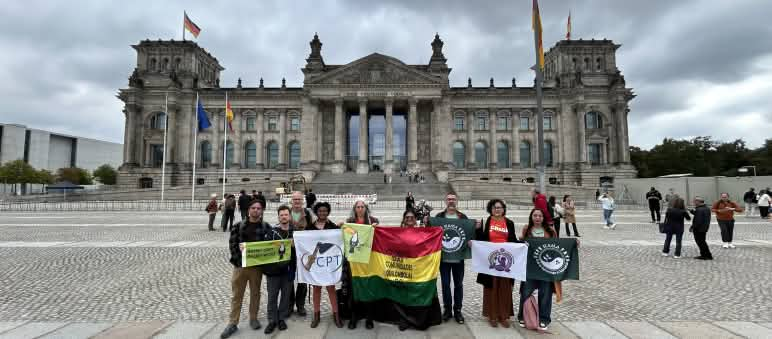
Over the following days, Rainforest Rescue arranged and attended a series of meetings in Berlin with the delegation. The activists met with lawmakers and their staff from the Left Party and the Greens in the Bundestag. Discussions focused on the chemical war in Maranhão, the expansion of soy production for export, the German government’s responsibility for the eco-genocide taking place in Maranhão’s Cerrado, and the double standard of exporting pesticides banned in Europe to Brazil.
Both parties have introduced parliamentary initiatives to ban these pesticide exports and end double standards. On April 21, 2026, the Greens submitted a draft act amending the Plant Protection Act. On September 22, 2026, the Left Party submitted “End double standards – ban exports of unauthorized plant protection products and adopt zero tolerance for residues of banned active substances in food.” On October 30, 2026, the Left Party also submitted a minor interpellation to the federal government titled “Exports of banned pesticides and pesticide active substances from Germany.”
We requested meetings with the development ministry (BMZ), the agriculture ministry, the environment ministry, the Federal Foreign Office and the state-owned development agency GIZ. Our requests were either rejected for “scheduling reasons” or left unanswered. The German government clearly does not want to speak with people who suffer the consequences of our soy consumption and of the German chemical industry’s business interests.
The delegation’s program also included important meetings with human rights and environmental organizations in Berlin, among them Client Earth and the European Center for Constitutional and Human Rights (ECCHR), both of which work on legal issues. At the Research and Documentation Center Chile-Latin America (FDCL), we held a networking meeting with other environmental, human rights and development organizations.
The delegation then traveled to Switzerland for bilateral talks with representatives of the United Nations (UN) in Geneva. The delegation also attended an event at the Palais des Nations linked to the 63rd session of the UN Human Rights Council. The Brazilian Institute of Human Rights (IBDH) organized a panel discussion in Geneva titled “Pesticide use and human rights violations in Brazil.”
- RAMA, September 2026. Chemical Warfare in Maranhão and Unsustainable Agribusiness: impacts on Indigenous peoples and traditional communities in Maranhão: https://www.rainforest-rescue.org/files/en/Cartilha%20Rama.pdf
- RAMA, September 2026. Maranhão and its peoples: chemical warfare and eco-genocide in the Amazon and the Cerrado: https://www.rainforest-rescue.org/files/en/Brasil_EN_V1.pdf
- CPT Maranhao, 2026. Poisoned in Maranhão. The violence suffered by traditional communities and their resistance in their waters, lands, crops, and livestock: https://www.rainforest-rescue.org/files/en/Cartilha%20CPT.pdf
Meetings were held with lawmaker Lisa Badum; staff of Green lawmakers Karl Bär, Harald Ebner and Dr. Jan Niclas Gesenhues; and staff of Left Party lawmakers Marcel Bauer and Ina Latendorf.
Bündnis 90/Die Grünen, 21.4.2026. Entwurf eines Gesetzes zur Änderung des Pflanzenschutzgesetzes: https://dserver.bundestag.de/btd/21/054/2105481.pdf
Die Linken, 21.9. 2026. Doppelstandards beenden – Exportverbot für nicht genehmigte Pflanzenschutzmittel und Nulltoleranz für Rückstände verbotener Wirkstoffe in Lebensmitteln: https://dserver.bundestag.de/btd/21/080/2108073.pdf
Die Linken, 30.10.2026. Export von verbotenen Pestiziden und Pestizidwirkstoffen aus Deutschland: https://dserver.bundestag.de/btd/21/088/2108862.pdf
This page is available in the following languages:
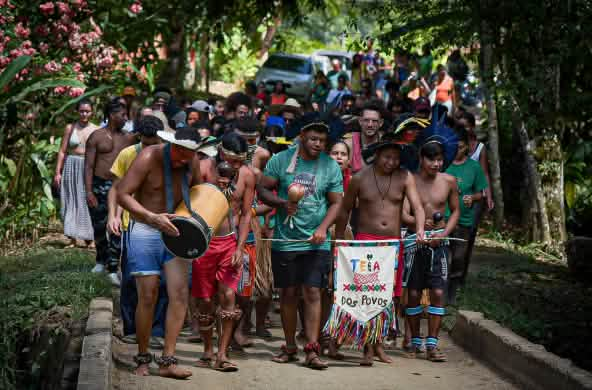
Traditional peoples and communities defend forests and food sovereignty
Amid Brazil’s agribusiness frontiers, Bahia’s Peoples’ Web is restoring forests and food sovereignty through shared ancestry and solidarity.
Brazil: Ban the aerial spraying of pesticides!
Industrial soy producers in Brazil are attacking small farmers by spraying pesticides over people and their crops using planes and drones.