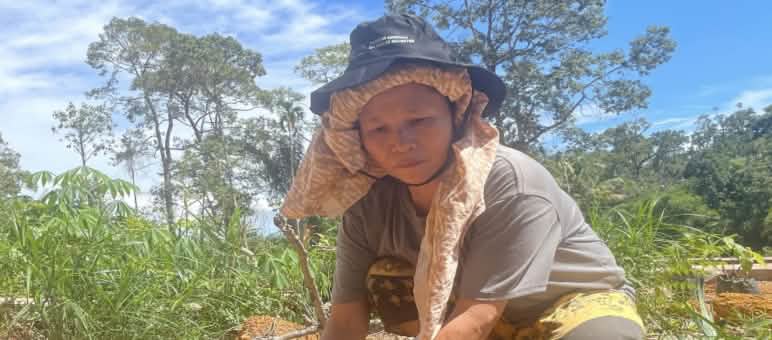
Tapanuli: emergency aid, clean water, seedlings and new hope
Indonesia: Eight months after Cyclone Senyar devastated the region, Rianda Purba, Director of our partner organization WALHI North Sumatra, reports on emergency aid, reconstruction and healing in Tapanuli. His heartfelt thanks go to Rainforest Rescue’s donors.
On November 25, Cyclone Senyar struck Sumatra. It caused severe devastation, particularly in the provinces of Aceh, West Sumatra and North Sumatra. More than 1,200 people died.
Tapanuli was hit especially hard by flash floods and landslides. By the end of December 2025, the provincial disaster management agency reported that 1,803,549 people had been affected. 11,574 had to be evacuated, 365 had died, 206 were injured and 60 people were reported missing.
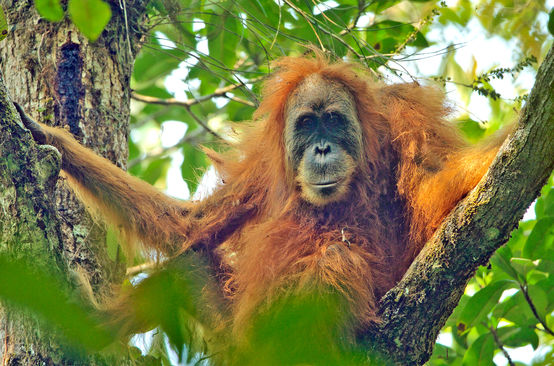
The extensive destruction in the Batang Toru Forest is especially tragic. It is home to the rare Tapanuli orangutans. Scientists estimate that around 58 of them also died. Tapanuli orangutans are found only in the Batang Toru Forest. Before the cyclone, their total population numbered no more than 800 individuals.
WALHI North Sumatra was on the ground immediately and, with prompt donations from Rainforest Rescue, was able to provide initial emergency aid in numerous villages and help people stranded by flooding on the east coast.
After the emergency response, staff and volunteers began working to provide access to clean water. They built wells and repaired water storage facilities. This work continued through June because of heavy rainfall and frequent flooding.
Rianda Puba writes in his report that the relief workers learned from the water: “A healing process is more than emergency aid. Not only do people need to be rescued and cared for, nature must also be allowed to recover, and the causes of these wounds, such as forest clearing, must be stopped. Water is the first step toward that. With water, people can return to life. Water gives hope and provides a strong foundation for the regeneration of the village community.”
Every aid package, every drop of water and every seedling is more than emergency aid. It is part of the effort to restore life, protect the environment and renew hope.
Rebuilding is underway, though the government has provided no assistance. The people refuse to give up, sustained by the solidarity around them. They are clearing fields and rivers of uprooted trees and debris.
They are planting cacao, coffee and eggplant. They are raising seedlings for a new forest, including durian, incense and cinnamon trees.
We thank Rainforest Rescue and every donor for placing their trust in WALHI North Sumatra. Your support has enabled us to stand with affected communities through the first stages of recovery.
-Rianda Purba, WALHI North Sumatra
Subscribe to our newsletter.
Stay in the loop on rainforest conservation issues with our free newsletter!
Read more:
August 10, 2026: The power plant in the Batang Toru Forest is still under construction, and the gold mine has reopened. China’s interests and those of Western investment funds matter more than the survival of the Tapanuli orangutans
April 2, 2026: Residents of Beutong in the Leuser Ecosystem thank all donors for emergency aid after the cyclone
January 21, 2026: Dozens of companies in Sumatra are shut down after the cyclone. Environmental groups question the seriousness of the sanctions.
December 7, 2025: The Ministry of Environment has frozen construction work on the Batang Toru hydropower plant. The Martabe gold mine south of the forest must also halt work.
This page is available in the following languages:
Stop bulldozing the Tapanuli orangutan!
A dam for a 510 MW hydropower plant in Batang Toru forest on Sumatra could spell oblivion for the recently discovered Tapanuli orangutan.
The rainforest
A green sea of ferns, mosses, vines and ancient trees. Iridescent butterflies and colorful birds. Flowers in every hue of the rainbow. The “green lung” is a natural wonder of the world. Find out more about the world’s most diverse, fascinating and threatened ecosystem.